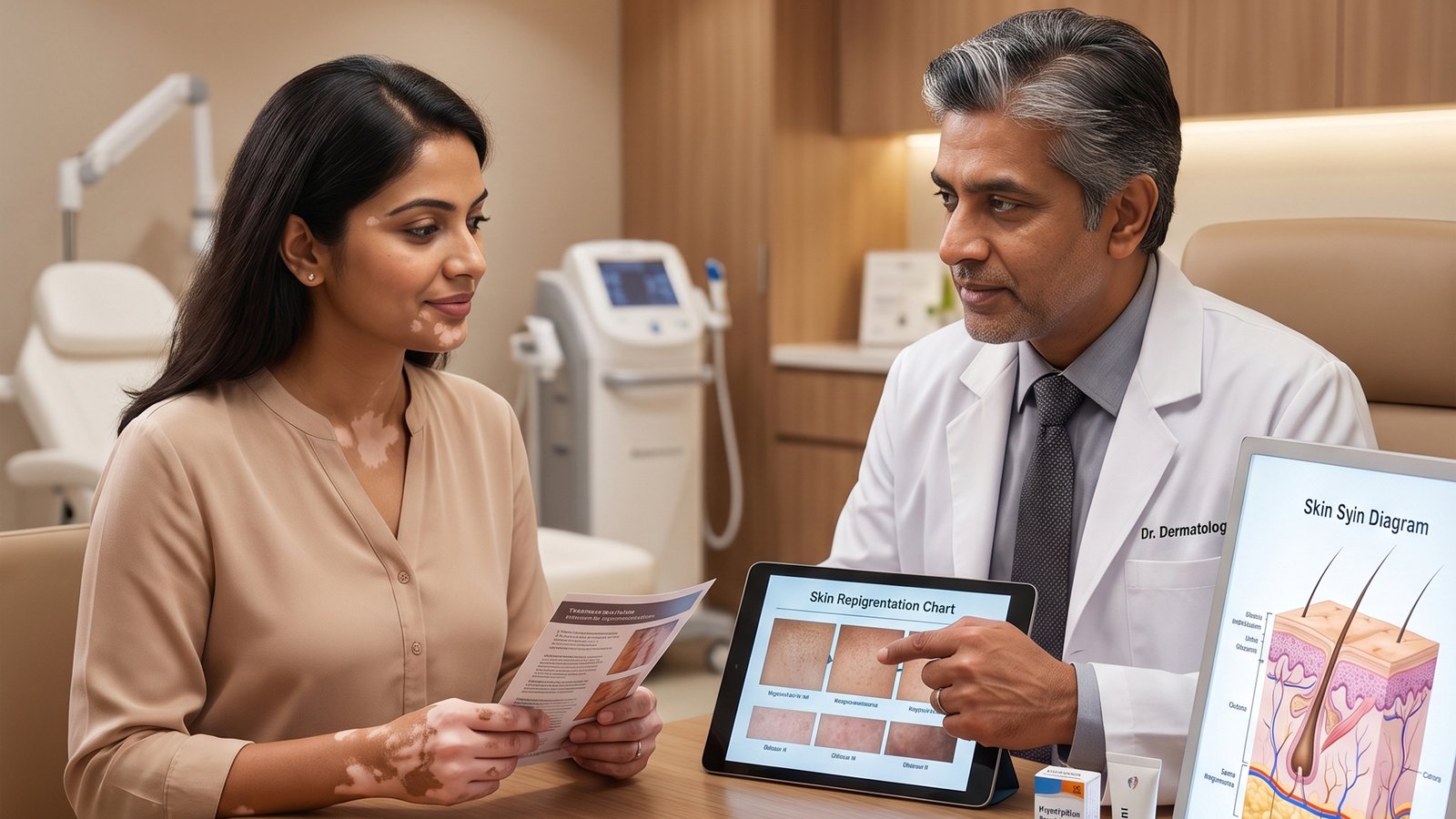
Vitiligo treatment requires a personalised approach, as every patient experiences different patterns of pigmentation loss, disease activity, and treatment responses. A customised Vitiligo Treatment Plan in India helps dermatologists identify suitable treatment options based on the patient’s skin condition and individual needs. This approach focuses on managing disease progression, promoting natural repigmentation, and supporting long-term skin health through appropriate treatment and regular follow-up care.
If you are exploring Vitiligo Repigmentation Treatment in India, understanding the complete treatment journey is essential for making informed decisions. Whether you have recently been diagnosed with vitiligo or have been managing the condition for years, knowing the different stages of treatment can help you choose suitable therapies, understand the repigmentation process, and set realistic expectations. With personalised treatment planning, dermatologist guidance, and regular follow-ups, patients can work towards improved skin pigmentation and effective long-term vitiligo management.
Vitiligo treatment refers to a personalized medical approach designed to:
Modern vitiligo management may include medications, phototherapy, nutritional support, lifestyle modifications, and surgical procedures for stable cases.
An ideal Candidate for Vitiligo Treatment in India is someone experiencing white patches, pigmentation loss, or stable vitiligo. Both children and adults may benefit from personalised treatments, including medications, phototherapy, or excimer laser therapy, depending on their condition and dermatologist’s assessment.
Vitiligo develops when pigment-producing cells (melanocytes) are damaged or destroyed, often due to an autoimmune response. Understanding How Vitiligo Treatment Works in India helps patients explore suitable treatment options based on their condition, disease activity, and individual skin needs. A personalised treatment plan focuses on controlling disease progression, supporting natural repigmentation, and improving long-term skin health under the guidance of an experienced dermatologist.
Treatment works by:
Controlling Autoimmune Activity
Medical therapies help reduce immune-mediated destruction of melanocytes.
Stimulating Melanocyte Function
Targeted treatments encourage surviving melanocytes to produce pigment.
Promoting Repigmentation
Phototherapy and supportive therapies activate pigment production and migration.
Maintaining Results
Long-term monitoring helps prevent recurrence and maintain skin color improvement.
Before Treatment
After Treatment
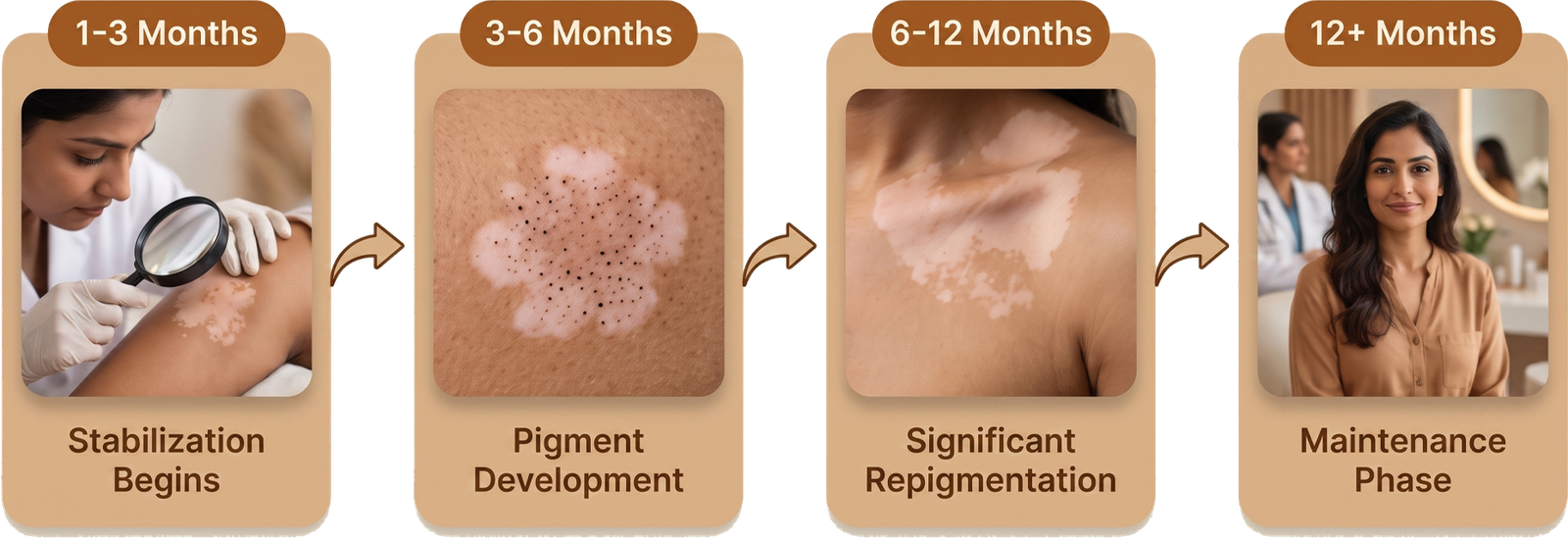
Patients undergoing vitiligo treatment may notice gradual improvements rather than immediate results, as repigmentation takes time and varies depending on the individual’s skin condition and response to therapy. Understanding how Vitiligo Treatment Works in India helps patients set realistic expectations and follow a personalised treatment plan designed to support steady progress, natural repigmentation, and long-term vitiligo management.
During treatment, you may notice:
Patience and consistency are essential for successful outcomes.
First 1–3 Months
3–6 Months
6–12 Months
Beyond 12 Months
Results vary depending on disease duration, location, and treatment adherence.
Side effects depend on the treatment method used and may include:
A consultation and detailed assessment help determine the most appropriate treatment plan and associated costs.
| Treatment Type | Best For | Main Goal |
|---|---|---|
| Medical Therapy | Active Vitiligo | Control disease progression |
| Phototherapy | Active & Stable Vitiligo | Stimulate repigmentation |
| Combination Therapy | Moderate to Extensive Cases | Faster and better outcomes |
| Surgical Treatment | Stable Vitiligo | Restore pigment in resistant areas |
| Maintenance Therapy | Post-Repigmentation | Prevent recurrence |
At a specialised Vitiligo Treatment Clinic in India, a personalised combination of therapies may provide better long-term results than a single treatment method, helping manage disease progression, support repigmentation, and improve overall skin health.
Book a Professional Evaluation
A thorough assessment helps determine:
Get a Personalized Treatment Plan
Every patient deserves a roadmap tailored to their unique condition, goals, and skin characteristics.
Begin Early for Better Outcomes
Early diagnosis and intervention may improve the likelihood of successful repigmentation and long-term disease control.
It’s time to take control of your skin health! Booking your appointment is easy and fast. Choose a time that works for you and our dermatology experts will be ready.