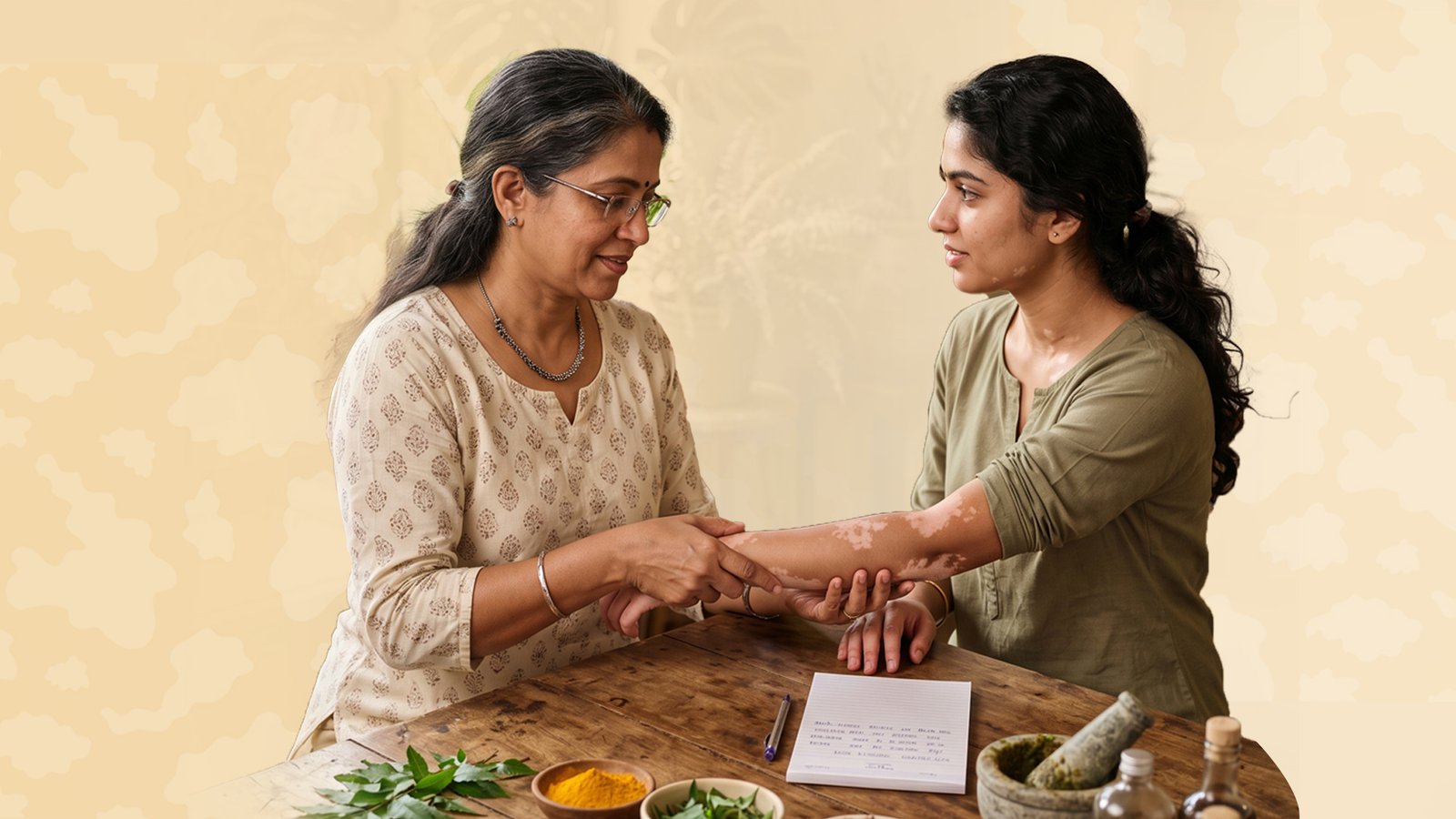
Ayurveda is one of the world’s oldest holistic healing systems focused on restoring balance within the body’s internal energies (Doshas: Vata, Pitta, Kapha). In Ayurveda, vitiligo is commonly correlated with “Shwitra” or “Kilas,” a condition associated with imbalance in Pitta dosha and impaired skin pigmentation. Ayurveda treatment for vitiligo in India is widely practiced within traditional healthcare systems and is often chosen for its natural, holistic approach. Within a modern Vitiligo Treatment Roadmap, Ayurveda is commonly used as a supportive or complementary therapy alongside phototherapy, topical medications, and lifestyle modifications.
Ayurvedic treatment for vitiligo is a natural and holistic approach that aims to:
It typically includes a combination of herbal medicines, internal detoxification therapies, dietary regulation, and external applications.
Ayurveda may be suitable for:
Not ideal as a standalone option for:
Ayurvedic theory explains vitiligo as:
Therapeutic action includes:
Ayurvedic formulations often utilize natural photosensitizing agents to stimulate melanocyte activity and encourage repigmentation. Key ingredients include:
Important: Ayurveda does not guarantee uniform or fast repigmentation; response varies by individual.
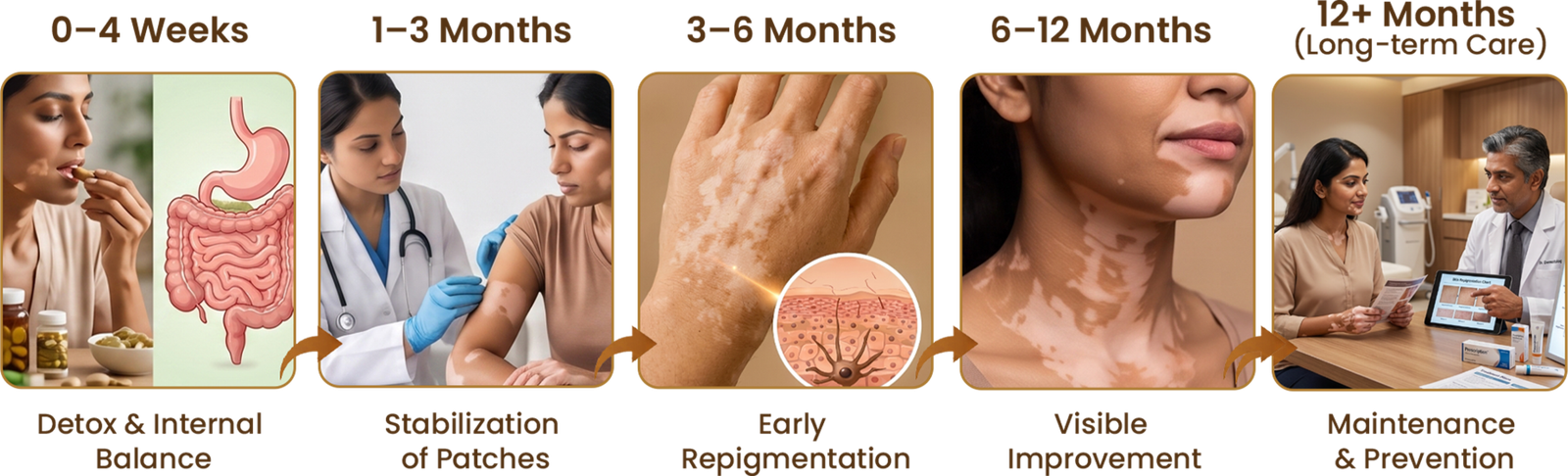
Ayurvedic treatment for vitiligo focuses on gradual healing by restoring internal balance, improving digestion, and supporting repigmentation over time. Results vary depending on disease stage, body response, consistency of treatment, and lifestyle discipline.
0–4 weeks: Detox effects, digestive improvement, improved energy levels, and initial body cleansing response (Shodhana phase)
1–3 months: Stabilization of disease activity, reduced progression of new patches, and improved internal balance of doshas
3–6 months: Early repigmentation in responsive patches, especially in newly formed or smaller white spots
6–12 months: Visible improvement in selected cases, with gradual restoration of skin pigmentation in affected areas
12+ months (long-term care): Maintenance phase focused on preventing relapse, improving skin health, and sustaining results
Generally mild when supervised:
Costs vary depending on:
Approximate range:
Factor | Ayurveda | Modern Treatments |
Approach | Holistic, natural | Medical, targeted |
Speed | Slow | Faster in many cases |
Evidence | Traditional + limited clinical data | Strong clinical evidence |
Best use | Supportive therapy | Primary treatment |
Side effects | Generally mild | Depends on therapy |
Best approach: Combination therapy often gives better long-term outcomes in many cases of Vitiligo.
It’s time to take control of your skin health! Booking your appointment is easy and fast. Choose a time that works for you and our dermatology experts will be ready.
VitiligoMD Clinic, Kate Square Building, 401, 4th floor, Pimple Gurav – 411061