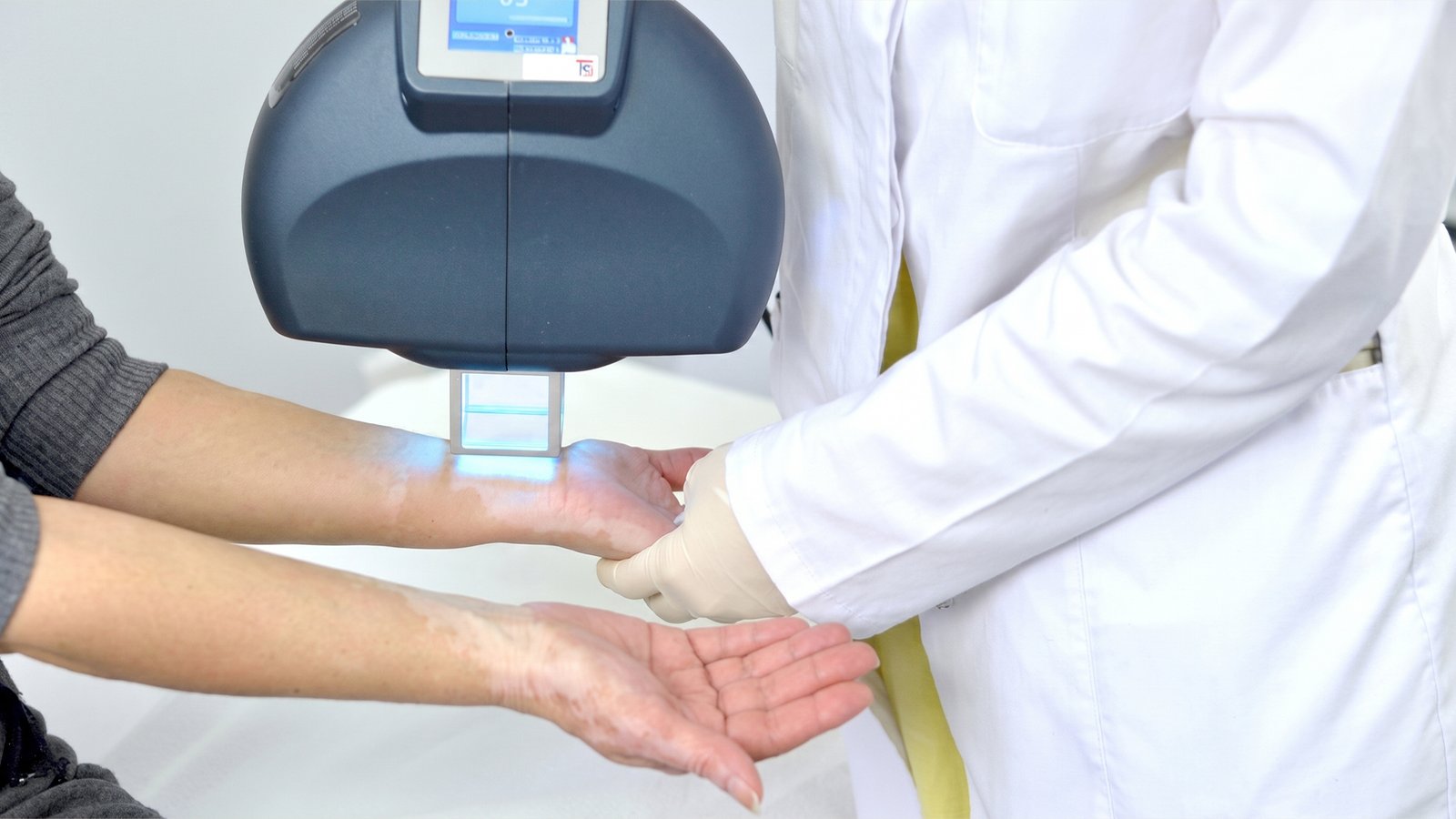
Excimer Laser therapy is particularly beneficial for individuals with localized vitiligo and areas that require precise treatment.
Vitiligo occurs when melanocytes, the cells responsible for producing skin pigment, become damaged or destroyed due to an autoimmune response.
Mechanism of Action
The 308 nm Excimer Laser works by:
Because treatment is focused only on vitiligo patches, higher therapeutic doses can often be delivered safely and effectively.
Following recommended precautions can help maximize treatment outcomes and minimize side effects.
Before Treatment
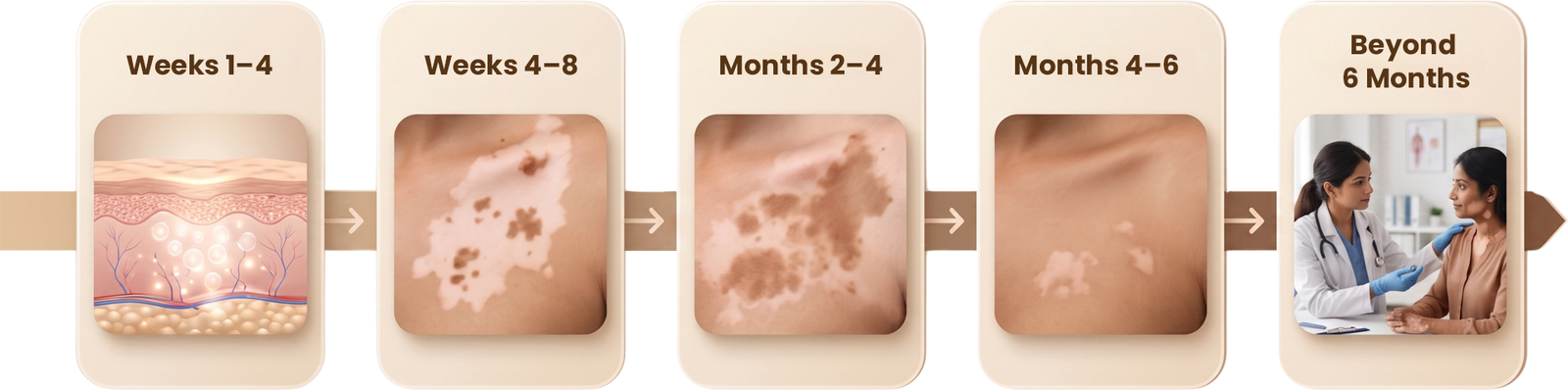
Excimer Laser therapy produces gradual improvements over time as pigment cells begin to regenerate and spread across affected areas.
Early Treatment Phase
During the first few weeks, cellular activity increases beneath the skin, although visible changes may be limited.
Progressive Repigmentation
As treatment continues, small pigment spots often appear within depigmented patches. These areas gradually expand and merge, improving overall skin color.
Areas with Better Response Rates
Repigmentation tends to occur more effectively in:
Areas That May Respond More Slowly
Certain regions can require longer treatment durations, including:
Weeks 1–4
Weeks 4–8
Months 2–4
Months 4–6
Beyond 6 Months
Excimer Laser treatment is generally well tolerated when performed under professional supervision.
Common Temporary Effects
Less Common Side Effects
Most side effects are mild and resolve without long-term complications.
The cost of treatment varies depending on several factors.
Factors Affecting Treatment Cost
Estimated Cost Range
A detailed consultation is recommended to determine an accurate treatment estimate.
| Treatment | Best For | Repigmentation Potential | Safety Profile |
|---|---|---|---|
| NB-UVB Phototherapy | Localized & widespread vitiligo | High | Excellent |
| Topical Medicines | Small patches | Moderate | Good |
| Excimer Laser | Localized patches | High | Good |
| Oral Medicines | Active vitiligo control | Supportive | Depends on medication |
| Surgical Grafting | Stable resistant vitiligo | High | Procedure dependent |
Best approach: Combination therapy often gives better long-term outcomes in many cases of Vitiligo.
Schedule a Dermatology Consultation
A specialist will evaluate:
Develop a Personalized Treatment Plan
Your treatment roadmap may include:
Maintain Consistency
Regular treatment sessions and adherence to medical advice are essential for achieving optimal repigmentation results.
The treatment can restore pigmentation and improve appearance, but vitiligo is a chronic condition that may require long-term management.
Most patients require multiple sessions, often ranging from 20 to 40 treatments depending on disease severity and response.
The treatment is generally painless. Some individuals may experience a mild warming sensation during the session.
Yes. Excimer Laser is commonly used in children because it precisely targets affected areas while minimizing exposure to healthy skin.
Yes. Combining Excimer Laser with topical medications and other vitiligo therapies often improves treatment outcomes.
For localized vitiligo, Excimer Laser offers greater precision and may provide faster results. For widespread vitiligo, NB-UVB phototherapy may be more suitable.
Excimer Laser (308 nm) is one of the most effective targeted treatment options for localized vitiligo. By delivering focused UVB energy directly to depigmented skin, it supports melanocyte regeneration, promotes repigmentation, and minimizes exposure to surrounding healthy tissue. When integrated into a personalized Vitiligo Treatment Roadmap, Excimer Laser therapy can help patients achieve improved skin color restoration and long-term disease management.
It’s time to take control of your skin health! Booking your appointment is easy and fast. Choose a time that works for you and our dermatology experts will be ready.
VitiligoMD Clinic, Kate Square Building, 401, 4th floor, Pimple Gurav – 411061