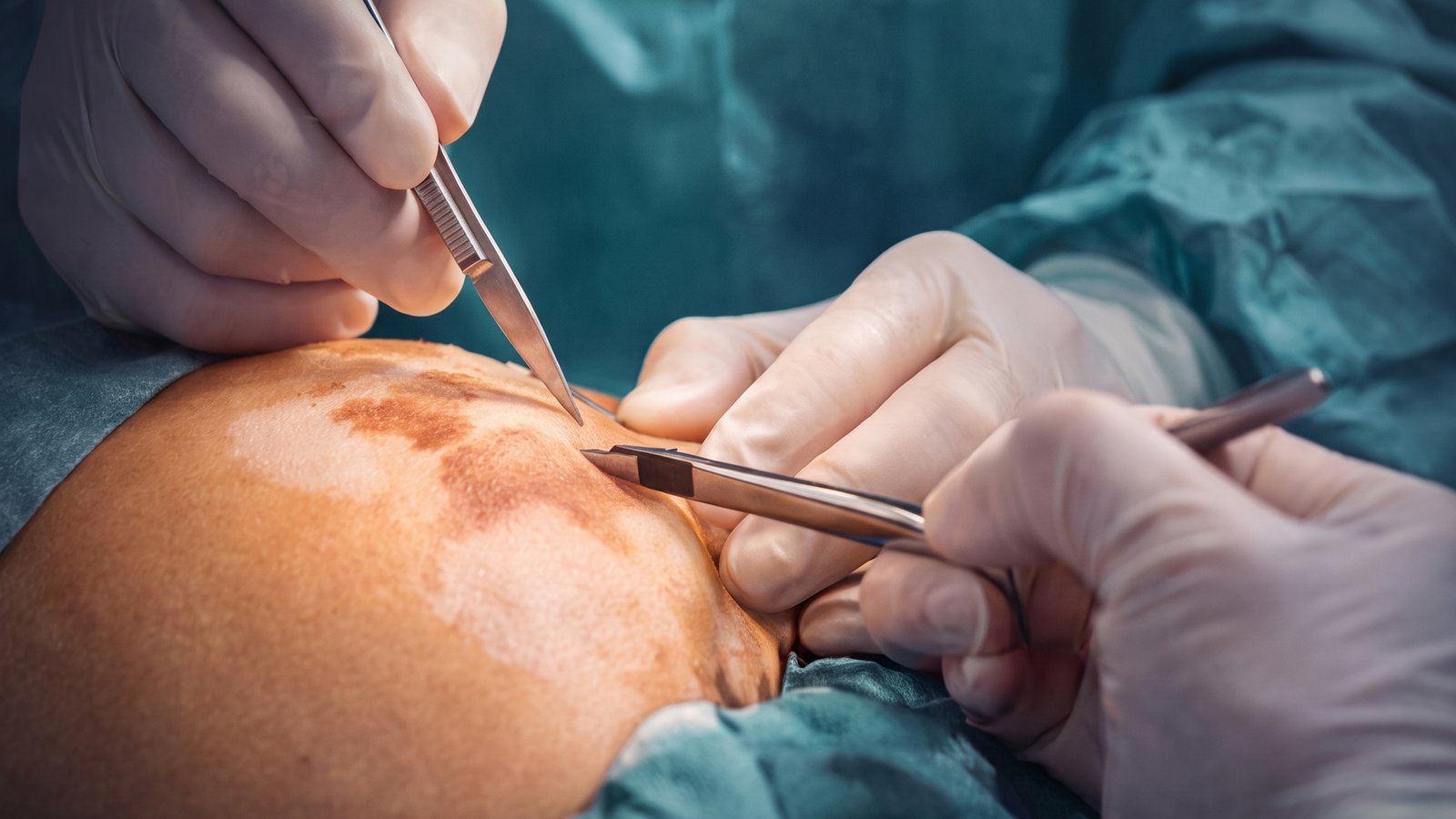
Surgical Options for Stable Vitiligo in India are procedures used to restore skin pigmentation in carefully selected patients with stable vitiligo. These treatments are generally considered when no new patches or significant disease progression have occurred for at least 6–12 months, particularly when medical treatments and phototherapy have not provided satisfactory repigmentation.
Vitiligo Surgery in India works by transferring healthy pigment-producing cells, known as melanocytes, from normally pigmented skin to depigmented white patches. This helps reintroduce natural pigmentation to the affected areas and may provide long-lasting repigmentation in suitable patients.
These procedures are mainly considered for localized, stable vitiligo and are selected based on factors such as the stability of the condition, patch location, size, and previous treatment response. For appropriately selected patients, Vitiligo Surgery in India can be an effective option when conventional treatments have not achieved the desired results.
Surgical Options for Stable Vitiligo are generally recommended for patients whose condition has remained stable and who have not achieved satisfactory repigmentation through medications or phototherapy. Surgery for Stable Vitiligo in India may include advanced procedures such as skin grafting and melanocyte transplantation to help restore pigmentation in affected areas. Careful patient evaluation and selection are essential to improve treatment outcomes, support successful repigmentation, and promote long-term results.
Suitable Candidates:
Not Suitable For:
Surgical Options for Stable Vitiligo work by transferring healthy pigment-producing cells
Surgical Options for Stable Vitiligo work by transferring healthy pigment-producing cells (melanocytes) from normally pigmented skin to areas affected by pigment loss. Surgical Treatment for Vitiligo in India may involve advanced techniques such as skin grafting and melanocyte transplantation to help restore melanin production and promote natural-looking skin repigmentation. These procedures are generally recommended for carefully selected patients with stable vitiligo, with results varying according to individual skin conditions and treatment response.
Proper pre- and post-operative care is essential for successful healing, graft survival, and optimal repigmentation following Surgery for Stable Vitiligo in India. Carefully following your dermatologist’s instructions can support the healing process, improve treatment outcomes, and help minimize the risk of potential complications.
Before procedure:
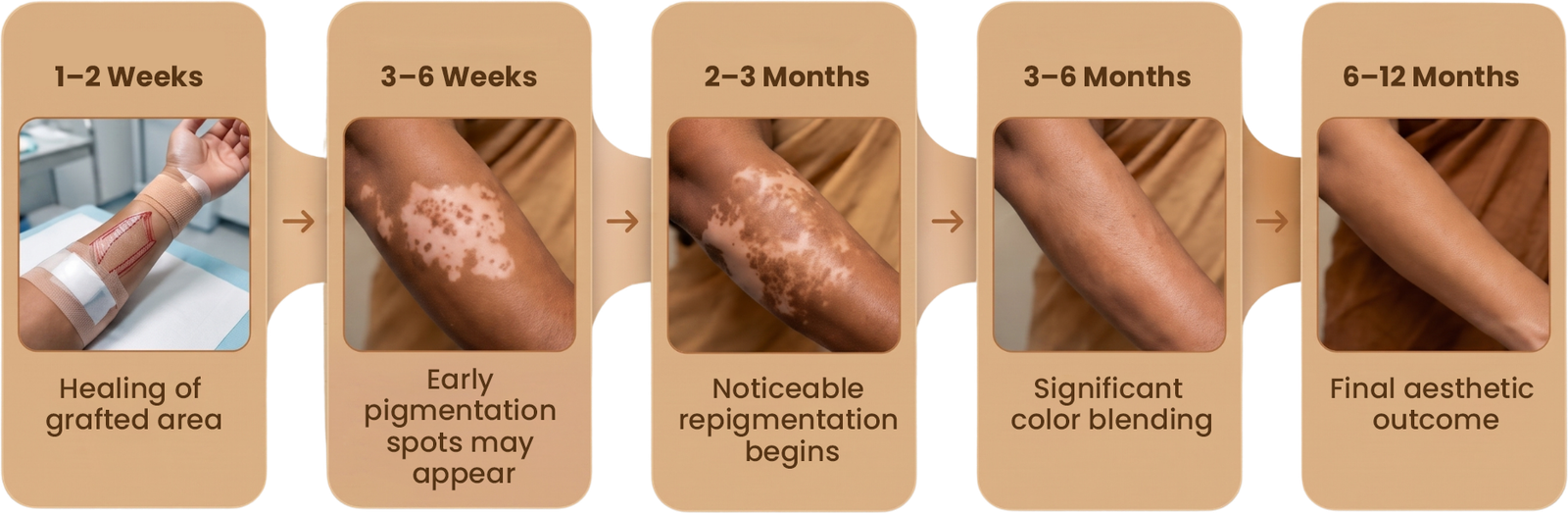
After vitiligo surgery, mild redness, swelling, or crusting may occur during the healing process. With Melanocyte Transplant for Vitiligo in India, repigmentation develops gradually over the following weeks and months as transplanted melanocytes begin producing pigment. Depending on individual response and treatment outcomes, some patients may require additional sessions or supportive phototherapy to achieve optimal results.
Vitiligo surgery results develop gradually as transplanted melanocytes begin producing pigment. Individual outcomes vary depending on disease stability, treatment method, and post-procedure care.
For best results, patients should follow post-treatment instructions and attend recommended follow-up or phototherapy sessions.
Vitiligo surgery is generally safe, but some patients may experience the following side effects.
Most side effects are mild and improve as the skin heals. Infection is rare when proper aftercare instructions are followed.
The cost of vitiligo surgery in India varies depending on the surgical technique used, the size and location of the affected area, and the expertise of the treatment center. Simple grafting procedures are generally more affordable, while advanced treatments such as Melanocyte-Keratinocyte Transplantation Procedure (MKTP) may involve higher costs.
The final cost may vary based on the clinic, city, technology used, and the number of treatment sessions required.
| Treatment | Best For | Key Benefit |
| Surgical Treatment | Stable, resistant vitiligo | Faster and long-lasting repigmentation |
| Phototherapy (NB-UVB) | Widespread vitiligo | Safe, non-surgical treatment for larger areas |
| Phototherapy (NB-UVB) | Early or small patches | Easy-to-use first-line treatment |
| Excimer Laser | Localized patches | Targeted treatment with faster results |
Surgery is typically recommended for stable vitiligo that has not responded adequately to other treatment options.
Results are long-lasting, but maintenance therapy like phototherapy may improve stability.
It is usually done under local anesthesia, so pain is minimal
Recurrence is possible if the disease becomes active again.
Typically 1–4 hours depending on the area treated
It’s time to take control of your skin health! Booking your appointment is easy and fast. Choose a time that works for you and our dermatology experts will be ready.