
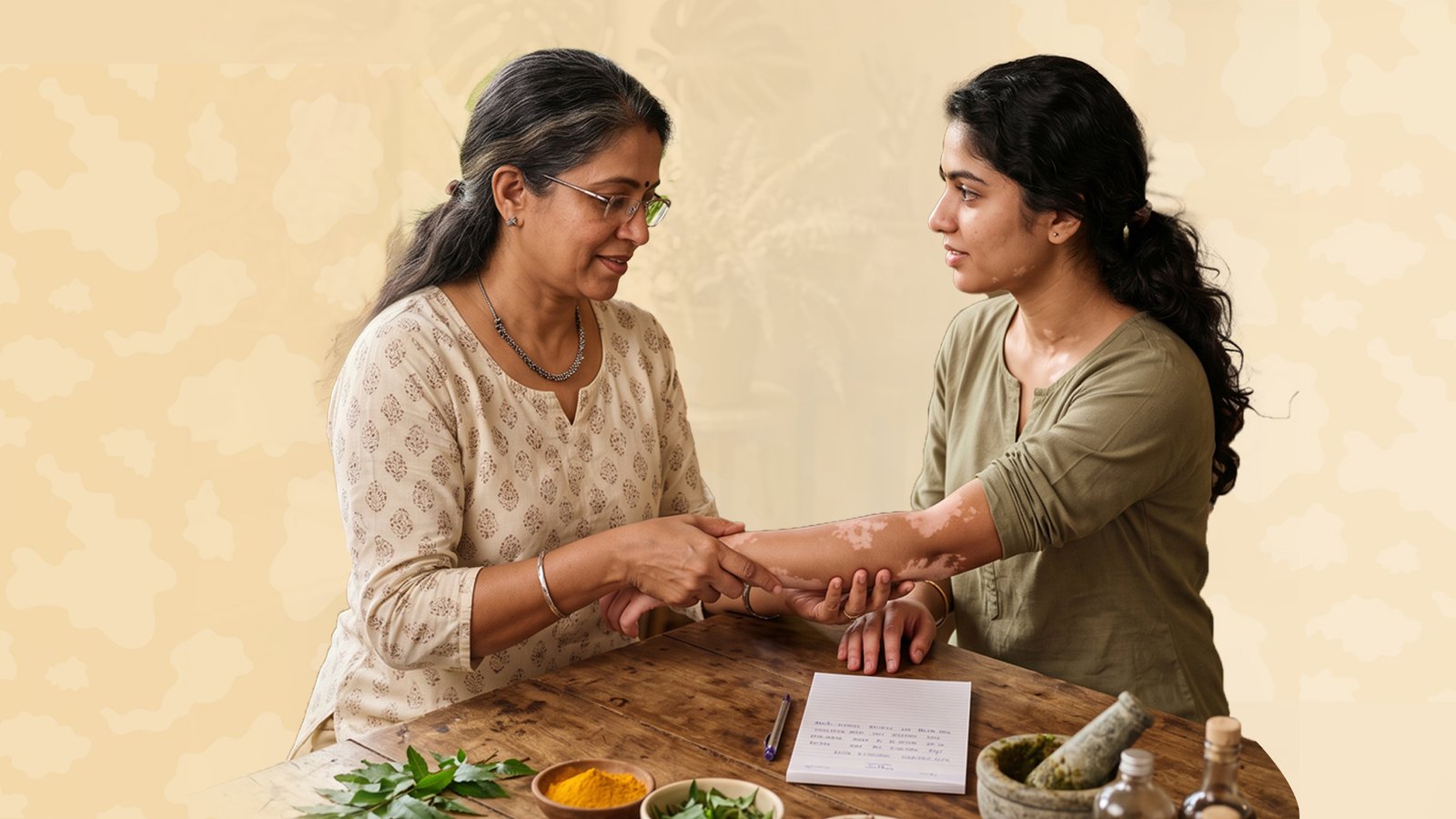
Ayurveda is one of the world’s oldest holistic healing systems, focusing on restoring balance within the body through the principles of Vata, Pitta, and Kapha. In Ayurvedic traditions, vitiligo is often associated with conditions such as “Shwitra” or “Kilas,” which are believed to involve imbalances affecting skin pigmentation. Ayurvedic Treatment for Vitiligo in India follows a holistic approach that considers lifestyle, diet, and overall well-being. Ayurvedic Vitiligo Treatment in India may be explored as supportive care alongside dermatologist-recommended treatments such as phototherapy, topical medications, and healthy lifestyle practices. However, scientific evidence supporting Ayurveda’s effectiveness in restoring pigmentation remains limited.
- Detoxify the body (Shodhana therapy)
- Balance doshas, especially Pitta
- Improve digestion and metabolism (Agni)
- Stimulate melanocyte activity (pigment-producing cells)
- Support gradual repigmentation of white patches
It typically includes a combination of traditional herbal medicines, internal cleansing therapies, dietary modifications, and external applications. An Ayurvedic Vitiligo Specialist in India may recommend a personalized approach based on an individual’s condition, overall health, and lifestyle needs, although scientific evidence supporting these treatments for vitiligo remains limited.
Ideal Candidate for Ayurveda Vitiligo Treatment
Ayurveda may be suitable for:
- Early-stage vitiligo
- Slowly spreading patches
- Stable vitiligo (no new patches for months)
- Patients preferring natural/holistic therapy
- Patients using Ayurveda as supportive care with modern treatments
- Children and adults under supervision
Not ideal as a standalone option for:
- Rapidly progressive vitiligo
- Extensive body involvement without medical supervision
How Ayurveda Works in Vitiligo
Ayurvedic theory explains vitiligo as:
- Imbalance of Pitta dosha (heat & pigmentation control)
- Accumulation of toxins (Ama)
- Weak digestion affecting skin health
Therapeutic action includes:
- Blood purification (Rakta Shodhana)
- Liver and gut detox support
- Immune modulation (reducing autoimmune response)
- Herbal stimulation of melanocyte activity
Steps of Ayurvedic Vitiligo Treatment Procedure
Types of Topical Ayurvedic Treatments
Ayurvedic Treatment for Vitiligo in India may include traditional herbal formulations and supportive therapies intended to promote skin health and support natural pigmentation. Vitiligo Ayurvedic Treatment in India focuses on a holistic approach using naturally derived ingredients that have traditionally been associated with skin care and pigmentation support. However, scientific evidence for their effectiveness in restoring pigmentation remains limited. Some commonly used Ayurvedic ingredients include:
- Bakuchi (Psoralea corylifolia) & Buchi Oil: Bakuchi is a primary Ayurvedic herb containing psoralens, which act as photosensitizing agents to increase the skin's sensitivity to UV light. It is applied topically as Buchi oil to white patches, followed by controlled exposure to sunlight or UV lamps to stimulate melanocyte activity and melanin production.
- Khellin: Derived from Ammi visnaga, Khellin is a photosensitizing agent used in topical gels. It works by sensitizing the skin to light to trigger repigmentation. The application involves applying the gel to affected areas followed by exposure to controlled sunlight or phototherapy to encourage the return of pigment.
- Combined Formulations: Many Ayurvedic-inspired formulations combine these agents with other botanical extracts (such as Bergamot, Piper Nigrum, and Nigella Sativa) to enhance absorption and effectiveness in supporting vitiligo management.
- Trioxsalen (Trimethylpsoralen) & Methoxsalen: These are powerful psoralen-class agents used to significantly sensitize the skin to light, which triggers the repigmentation process. Due to their high potency and the risk of severe burns if used incorrectly, they must be used strictly under professional medical supervision.
Precautions Before Ayurveda Treatment
- Inform doctor about ongoing medications
- Avoid self-medication with herbal products
- Check for liver or kidney conditions
- Avoid excessive sun exposure before starting
- Maintain stable diet routine before therapy
Precautions After Starting Treatment
- Follow prescribed dosage strictly
- Avoid junk, spicy, and acidic foods
- Do not discontinue abruptly
- Use sunscreen if advised during sunlight therapy
- Maintain consistency for long-term results
What to Expect During Ayurveda Treatment
- Gradual and slow improvement
- Stabilization of new patches
- Slight pigmentation return in early responsive cases
- Improved skin health and reduced dryness
Important: Ayurveda does not guarantee uniform or fast repigmentation; response varies by individual.
Result Timeline
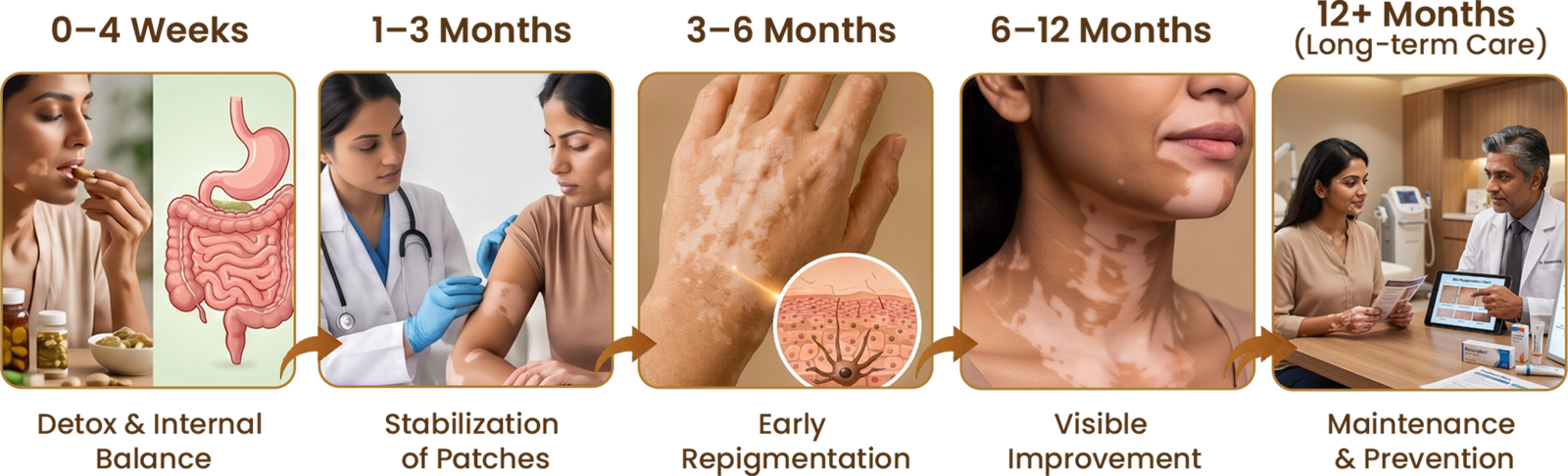
Ayurvedic Treatment for Vitiligo follows a gradual, holistic approach that focuses on supporting internal balance, healthy digestion, overall well-being, and skin health. Ayurveda for Vitiligo in India incorporates traditional herbal remedies, dietary guidance, and lifestyle practices that may complement dermatologist-recommended treatments. However, its effectiveness in restoring skin pigmentation is not well established, and individual outcomes may vary depending on the stage of vitiligo, treatment consistency, lifestyle habits, and individual response.
0–4 weeks: Detox effects, digestive improvement, improved energy levels, and initial body cleansing response (Shodhana phase)
1–3 months: Stabilization of disease activity, reduced progression of new patches, and improved internal balance of doshas
3–6 months: Early repigmentation in responsive patches, especially in newly formed or smaller white spots
6–12 months: Visible improvement in selected cases, with gradual restoration of skin pigmentation in affected areas
12+ months (long-term care): Maintenance phase focused on preventing relapse, improving skin health, and sustaining results
Side Effects of Ayurveda Treatment
Generally mild when supervised:
- Gastric discomfort (during detox phase)
- Allergic reactions to herbs (rare)
- Temporary fatigue during cleansing
- Skin sensitivity to sunlight (with certain herbs like Bakuchi)
Cost of Ayurveda Vitiligo Treatment in India
Costs vary depending on:
- Clinic reputation
- Duration of therapy
- Medicines and Panchakarma sessions
Approximate range:
- ₹1,500 – ₹5,000 per month (basic herbal care)
- ₹10,000 – ₹50,000+ for structured Panchakarma programs
Ayurveda vs Modern Vitiligo Treatments
Factor | Ayurveda | Modern Treatments |
Approach | Holistic, natural | Medical, targeted |
Speed | Slow | Faster in many cases |
Evidence | Traditional + limited clinical data | Strong clinical evidence |
Best use | Supportive therapy | Primary treatment |
Side effects | Generally mild | Depends on therapy |
Best approach: Combination therapy often gives better long-term outcomes in many cases of Vitiligo.
How to Start Ayurveda Treatment for Vitiligo
- Consult a qualified Ayurvedic physician
- Get proper Dosha & skin assessment
- Start detox only under supervision
- Follow prescribed herbal medicines strictly
- Maintain diet discipline
- Track progress every 4–6 weeks
Frequently asked questions
Ayurveda may help manage and improve pigmentation in some cases, but results vary and are not guaranteed.
Yes, under expert supervision and adjusted dosage.
Yes, many dermatologists use combined approaches for better outcomes.
Usually 3–6 months for visible early changes, depending on severity.
Yes, diet is a core part of Ayurvedic management for vitiligo.