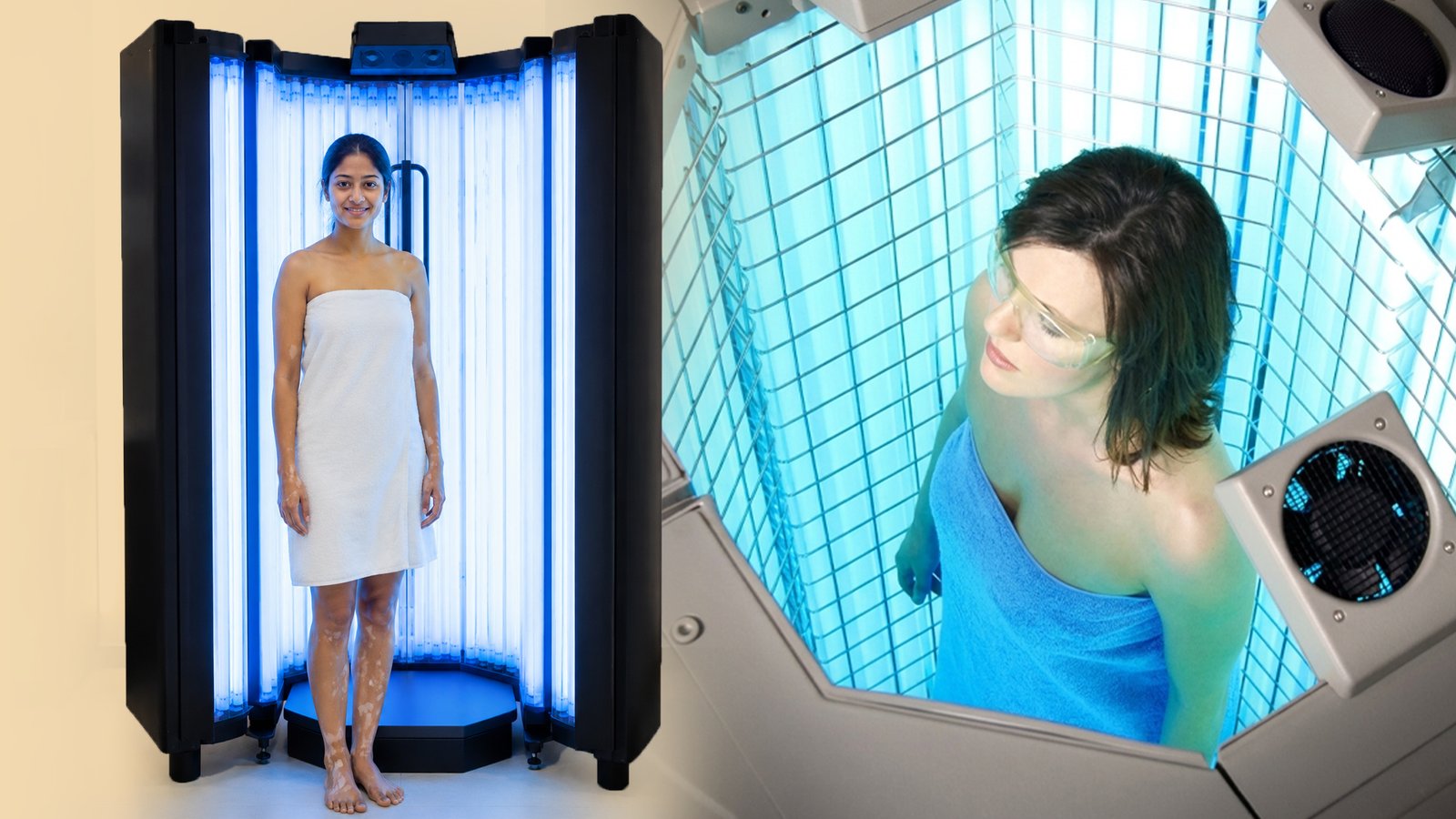
Narrowband Ultraviolet B (NB-UVB) Phototherapy is one of the most effective and scientifically proven treatments for vitiligo. It uses a specific wavelength of ultraviolet light (311–313 nm) to stimulate melanocytes (pigment-producing cells), reduce autoimmune activity, and encourage repigmentation of white patches.
As part of a comprehensive Vitiligo Treatment Roadmap, NB-UVB phototherapy is often combined with topical medications, oral therapies, and lifestyle modifications to achieve better and more sustained results.
Phototherapy may be recommended for:
Patients with Active Vitiligo
Individuals experiencing new white patches or enlargement of existing patches.
Patients with Extensive Vitiligo
Those with multiple patches affecting larger body areas where topical treatment alone may not be practical.
Patients Not Responding to Creams Alone
When topical medicines provide limited improvement.
Children and Adolescents
NB-UVB is considered safer than many older phototherapy options.
Patients Preparing for Combination Therapy
Phototherapy often works better when combined with modern medicines and supportive treatments.
Not Ideal For
A dermatologist will determine suitability after clinical evaluation.
Vitiligo occurs when the immune system mistakenly attacks melanocytes, causing pigment loss.
NB-UVB helps by:
1. Suppressing Autoimmune Activity
The targeted UVB wavelength calms the immune response responsible for melanocyte destruction.
2. Stimulating Melanocyte Regeneration
Surviving pigment cells become more active and begin producing melanin.
3. Activating Hair Follicle Melanocytes
Hair follicles contain dormant melanocyte reservoirs that can migrate into depigmented skin.
4. Promoting Repigmentation
Over time, pigment gradually spreads into white patches, reducing contrast and improving skin appearance.
Inform Your Doctor About:
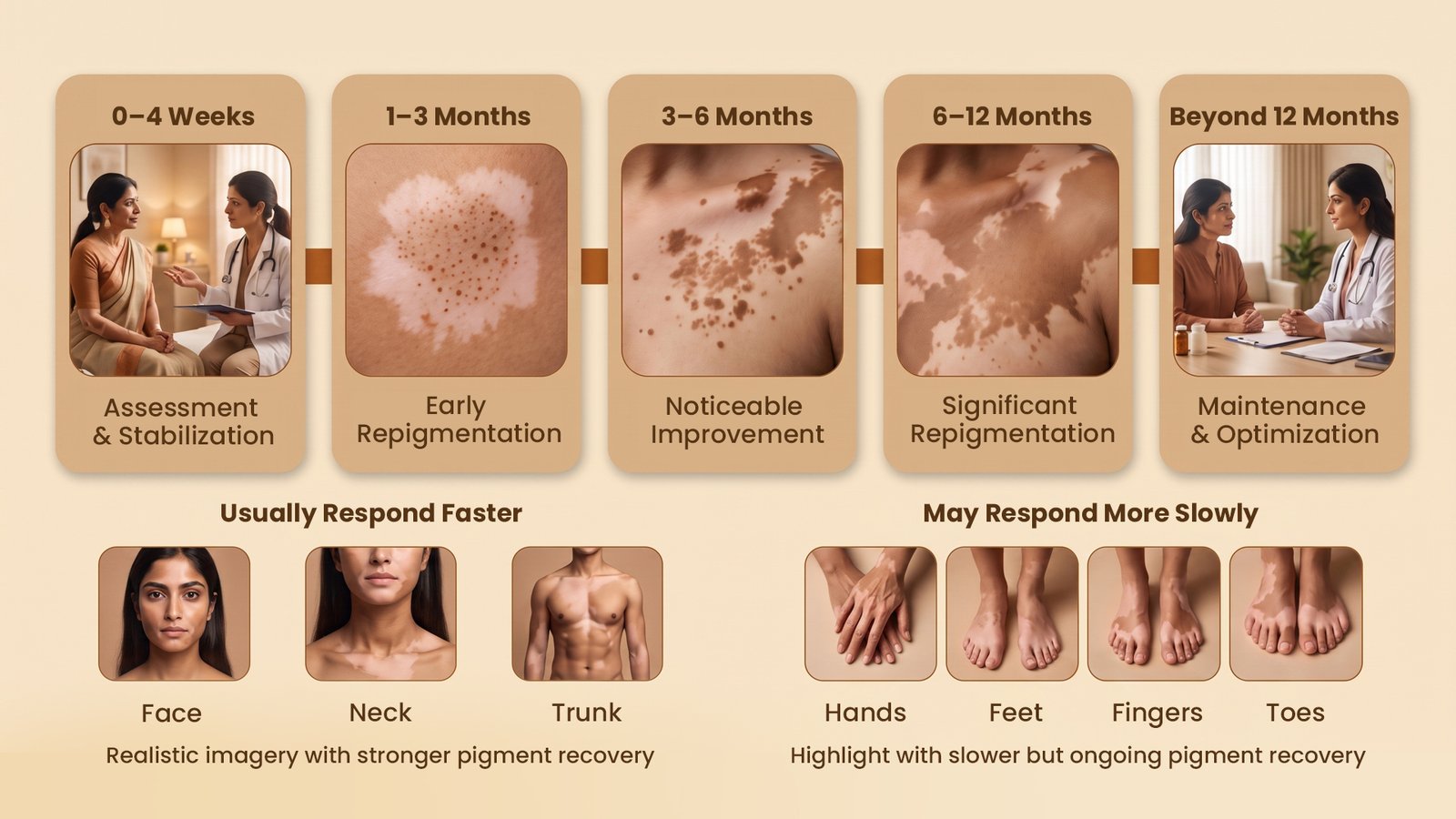
Most patients experience:
Early Phase (First Few Weeks)
Intermediate Phase
Progressive Repigmentation
Long-Term Improvement
Results vary depending on disease duration, patch location, and treatment consistency.
0–4 Weeks
1–3 Months
3–6 Months
6–12 Months
Beyond 12 Months
NB-UVB is generally well tolerated, but some patients may experience:
Most side effects are manageable when treatment is supervised by an experienced dermatologist.
The cost depends on:
A personalized consultation is the best way to estimate total treatment costs.
| Treatment | Best For | Repigmentation Potential | Safety Profile |
|---|---|---|---|
| NB-UVB Phototherapy | Localized & widespread vitiligo | High | Excellent |
| Topical Medicines | Small patches | Moderate | Good |
| Excimer Laser | Localized patches | High | Good |
| Oral Medicines | Active vitiligo control | Supportive | Depends on medication |
| Surgical Grafting | Stable resistant vitiligo | High | Procedure dependent |
Best approach: Combination therapy often gives better long-term outcomes in many cases of Vitiligo.
Step 1
Schedule a comprehensive vitiligo evaluation.
Step 2
Determine whether the disease is active or stable.
Step 3
Discuss:
Step 4
Create a personalized treatment roadmap that may include:
Step 5
Begin regular sessions and maintain follow-up appointments.
Consistency is one of the most important factors influencing treatment success.
It’s time to take control of your skin health! Booking your appointment is easy and fast. Choose a time that works for you and our dermatology experts will be ready.
VitiligoMD Clinic, Kate Square Building, 401, 4th floor, Pimple Gurav – 411061