


-
21 Sep 2026 BlogIs Vitiligo Curable in India? Everything You Need to Know
-
06 Mar 2025 UncategorizedUnderstanding the Causes of Acne and How to Treat It
-
06 Mar 2025 UncategorizedWhy Regular Skin Cancer Screenings Are Important
-
17 Oct 2026 BlogVitiligo vs Fungal Infection: How to Tell the Difference
-
10 Oct 2026 BlogCommon Myths About Vitiligo: Facts Every Patient Should Know
Quick Summary
White patches on skin are not always a sign of vitiligo. Several conditions, including fungal infections, nutritional deficiencies, and post-inflammatory skin changes, can cause loss of skin color. Understanding the differences between these conditions helps you seek the right diagnosis and treatment. This guide answers the most common questions about white patches on skin, their causes, symptoms, diagnosis, treatment options, and when to consult a dermatologist.
Have you recently noticed white patches on skin and wondered if they are a sign of vitiligo? While vitiligo is one of the most recognized causes of skin depigmentation, it is not the only reason white patches develop.
Several skin conditions can lead to loss of pigmentation, and each requires a different treatment approach. Understanding the white patches on skin causes can help you avoid unnecessary worry and ensure timely medical care.
This article answers the most common questions about white patches and explains how doctors identify the exact cause.
What Are White Patches on Skin?
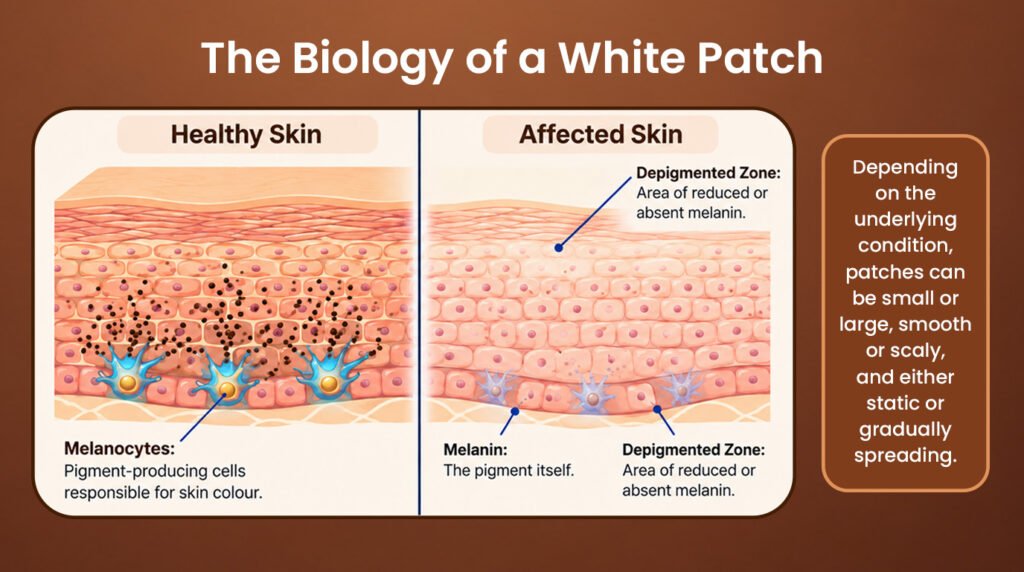
White patches on skin are areas where the skin becomes lighter than the surrounding skin due to reduced or absent melanin, the pigment responsible for skin color.
The patches may:
- Be small or large
- Appear anywhere on the body
- Stay the same size or gradually spread
- Have smooth or slightly scaly surfaces depending on the underlying condition
Not every white patch indicates vitiligo, which is why professional evaluation is important.
Is Every White Patch on Skin Vitiligo?
No.
One of the biggest misconceptions is that white patches on skin automatically mean vitiligo. In reality, many skin conditions can cause similar symptoms.
Common white patches on skin causes include:
- Vitiligo
- Fungal infections
- Pityriasis alba
- Post-inflammatory hypopigmentation
- Nutritional deficiencies
- Chemical exposure
- Certain autoimmune disorders
A dermatologist examines the appearance, location, medical history, and sometimes performs additional tests before making a diagnosis.

What Causes White Patches on Skin?
Understanding the white patches on skin causes helps determine the right treatment.
Some common causes include:
1. Vitiligo
Vitiligo develops when melanocytes (pigment-producing cells) stop functioning or are destroyed. It usually causes sharply defined white patches that may gradually enlarge.
2. Fungal Infection
Certain fungal infections can produce lighter patches with mild scaling and itching. These are often mistaken for vitiligo but respond well to antifungal treatment.
3. Pityriasis Alba
This mild skin condition commonly affects children and teenagers. It causes pale patches, especially on the face, and is often associated with dry skin or eczema.
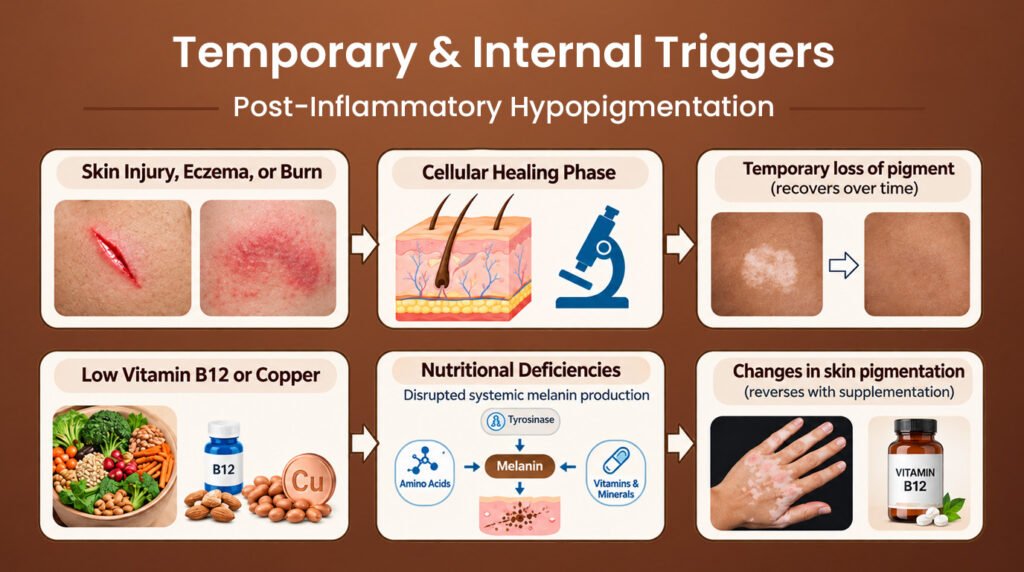
4. Post-Inflammatory Hypopigmentation
After burns, eczema, psoriasis, or skin injuries, temporary pigment loss may occur while the skin heals.
5. Nutritional Deficiencies
Low levels of vitamin B12, copper, or other nutrients may contribute to changes in skin pigmentation.
How Can You Identify Vitiligo?
Many people ask, “How to identify vitiligo?”
Although only a dermatologist can confirm the diagnosis, common signs include:
- Milky white, well-defined patches
- Smooth skin without scaling
- Symmetrical distribution in many cases
- Gradual enlargement of patches
- Loss of pigment in eyebrows, eyelashes, or hair
- White patches around the mouth, eyes, hands, knees, or feet
If you’re unsure, avoid self-diagnosis because vitiligo vs fungal infection can look similar in the early stages.
Vitiligo vs Fungal Infection: How Are They Different?
Many patients confuse vitiligo vs fungal infection because both can produce lighter skin.
Feature | Vitiligo | Fungal Infection |
Skin Color | Bright white | Light or pale patches |
Itching | Usually absent | Common |
Scaling | No | Often present |
Spread | May gradually enlarge | Can spread through fungal growth |
Cause | Autoimmune | Fungal organism |
Treatment | Medical management | Antifungal medicines |
A Wood’s lamp examination and skin evaluation often help distinguish the two conditions.
How Do Dermatologists Diagnose White Patches?
Diagnosis usually involves:
- Complete skin examination
- Medical and family history
- Wood’s lamp examination
- Dermoscopy
- Blood investigations if autoimmune disease is suspected
- Skin biopsy in rare cases
Early diagnosis helps doctors begin appropriate white skin patches treatment before the condition progresses.
What Are the Treatment Options for White Skin Patches?
The right white skin patches treatment depends entirely on the underlying cause.
Treatment options may include:
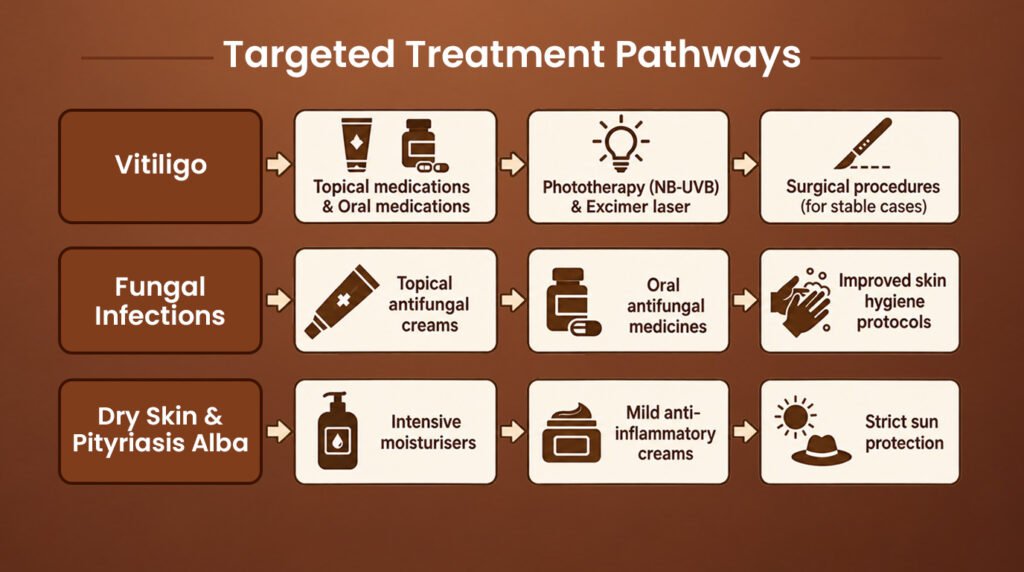
For Vitiligo
- Topical medications
- Phototherapy (NB-UVB)
- Excimer laser therapy
- Oral medications in selected cases
- Surgical procedures for stable vitiligo
For Fungal Infection
- Antifungal creams
- Oral antifungal medicines
- Good skin hygiene
For Dry Skin or Pityriasis Alba
- Moisturizers
- Mild anti-inflammatory creams
- Sun protection
The earlier treatment begins, the better the chances of managing pigmentation changes effectively.
When Should You See a Dermatologist for White Patches?
You should consult a skin specialist if you notice:
- New white patches appearing suddenly
- Patches increasing in size
- Multiple areas affected
- White patches on face or hands
- Family history of vitiligo
- Hair turning white within affected areas
- Skin discoloration lasting several weeks
Prompt evaluation helps identify the exact skin discoloration causes and prevents delayed treatment.
Can White Patches Be Prevented?
Not every cause can be prevented, especially autoimmune conditions like vitiligo. However, you can reduce the risk of certain skin problems by:
- Protecting your skin from excessive sun exposure
- Treating fungal infections early
- Avoiding harsh chemicals on the skin
- Maintaining a balanced diet
- Managing chronic skin diseases promptly
- Visiting a dermatologist if pigmentation changes persist
Conclusion
Finding white patches on skin does not necessarily mean you have vitiligo. Several conditions—including fungal infections, pityriasis alba, nutritional deficiencies, and post-inflammatory pigment changes—can produce similar symptoms.
Since each condition requires different treatment, accurate diagnosis is essential. If you notice persistent or spreading white patches, consult a qualified dermatologist for a thorough evaluation. Early diagnosis and personalized treatment can significantly improve outcomes and help restore confidence.
Frequently Asked Questions
No. White patches can also result from fungal infections, pityriasis alba, post-inflammatory hypopigmentation, nutritional deficiencies, or other skin conditions.
Yes. Certain fungal infections can create light-colored patches with mild scaling and itching, which may resemble vitiligo.
Dermatologists diagnose vitiligo through a skin examination, Wood’s lamp evaluation, medical history, and occasionally blood tests or a skin biopsy.
Not always. Many white facial patches are harmless, but persistent or enlarging patches should be evaluated by a dermatologist to determine the underlying cause.
Some conditions, such as post-inflammatory hypopigmentation or pityriasis alba, may improve over time. Vitiligo, however, usually requires medical treatment to manage pigmentation loss.
The best treatment depends on the cause. Vitiligo may require topical medicines or phototherapy, while fungal infections respond to antifungal medications.
Seek medical advice if the patches spread quickly, involve the face or hands, are accompanied by white hair, or do not improve after a few weeks.
Yes. Deficiencies in vitamin B12, copper, and certain other nutrients may contribute to pigment changes in some individuals, although they are less common causes than vitiligo or fungal infections.