

-
21 Sep 2026 BlogIs Vitiligo Curable in India? Everything You Need to Know
-
06 Mar 2025 UncategorizedUnderstanding the Causes of Acne and How to Treat It
-
06 Mar 2025 UncategorizedWhy Regular Skin Cancer Screenings Are Important
-
17 Oct 2026 BlogVitiligo vs Fungal Infection: How to Tell the Difference
-
10 Oct 2026 BlogCommon Myths About Vitiligo: Facts Every Patient Should Know
Quick Summary
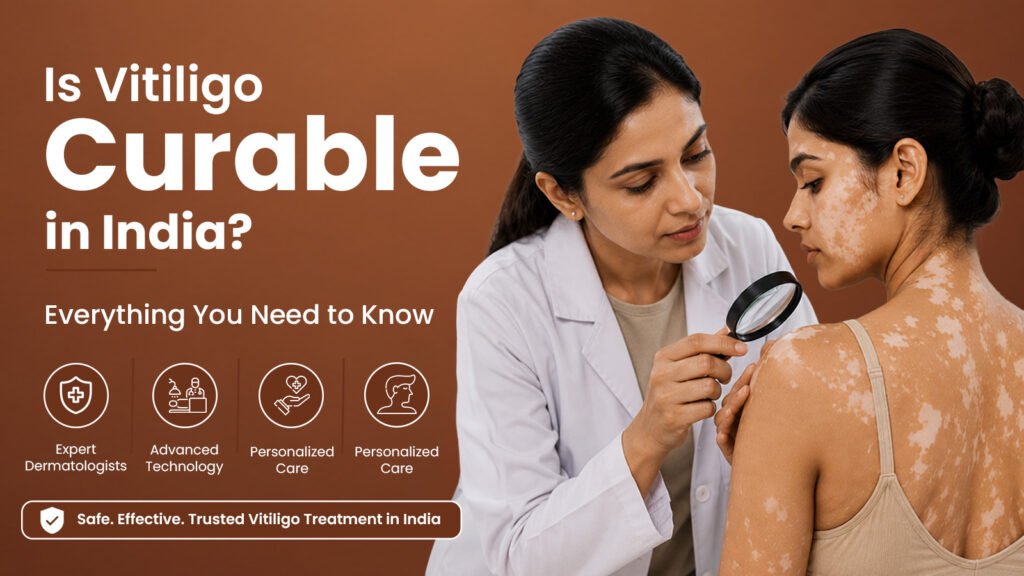
Vitiligo is a long-term skin condition that causes white patches due to loss of pigment. While it is not always considered fully curable, it is definitely treatable and manageable with modern medical treatments available in India. Early diagnosis, consistent treatment, and proper care can significantly improve skin pigmentation and control its spread.
Vitiligo is a skin condition that affects millions of people worldwide, including a large number in India. It leads to the appearance of white patches on the skin due to the loss or destruction of melanocytes, the cells responsible for producing melanin (skin pigment).
One of the most common questions patients ask is: Is vitiligo curable in India?
The answer is not simple, but the good news is that vitiligo can be effectively treated and controlled in many cases using advanced medical therapies available today.
This Q&A-style guide explains everything you need to know about vitiligo, its causes, treatment options, and recovery possibilities in India.
What is Vitiligo?
Vitiligo is a chronic skin disorder where the skin loses its natural color in patches. These patches can appear on different parts of the body, including the face, hands, arms, feet, and around body openings.
It occurs when melanocytes stop functioning or are destroyed, leading to depigmented (white) areas on the skin.
Is Vitiligo Curable in India?
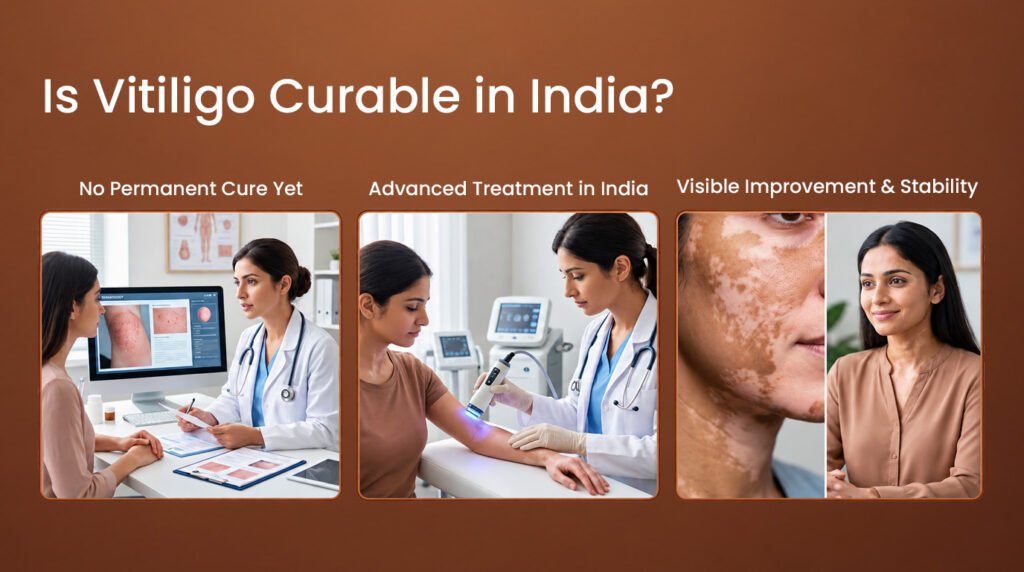
Vitiligo does not have a guaranteed permanent cure yet. However, in India, it is highly treatable with advanced dermatological procedures.
With proper treatment, many patients experience:
- Significant repigmentation of skin
- Control over spread of white patches
- Long-term stability of the condition
So, while vitiligo may not always be fully “cured,” it can often be successfully managed and improved, especially when treated early.
What Causes Vitiligo?
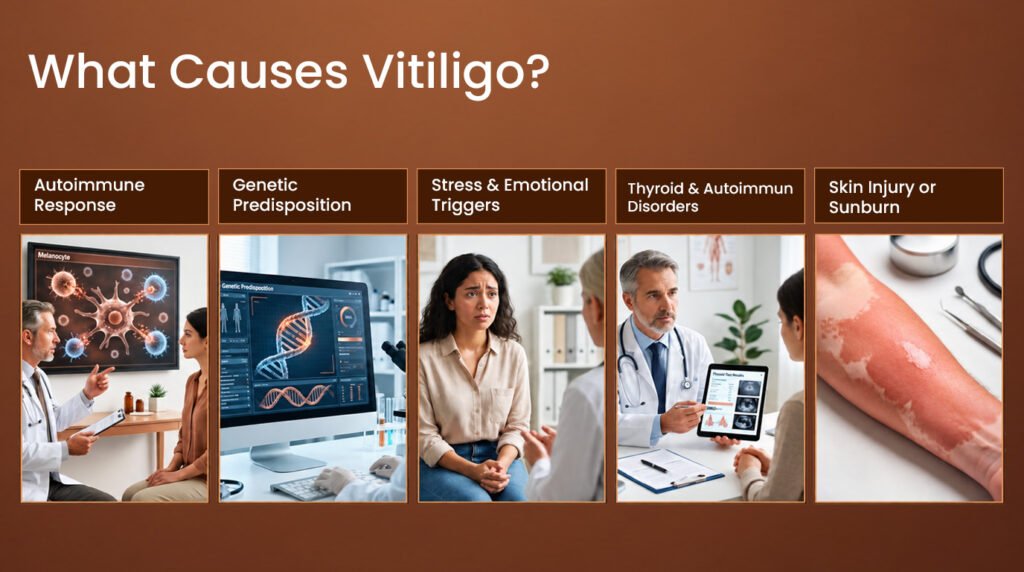
The exact cause of vitiligo is not fully understood, but several factors may contribute:
- Autoimmune response (body attacks its own melanocytes)
- Genetic predisposition
- Stress and emotional triggers
- Thyroid or other autoimmune disorders
- Skin injury or sunburn
In many Indian patients, a combination of genetic and autoimmune factors is commonly observed.
What Are the Symptoms of Vitiligo?
The main symptom is the appearance of white or light-colored patches on the skin. Other signs include:
- Loss of color in patches on face, hands, or body
- Premature whitening of hair on scalp, eyebrows, or eyelashes
- Color change inside the mouth or nose (in some cases)
- Symmetrical or spreading patches over time
Early detection is important for better treatment results.

What Are the Treatment Options for Vitiligo in India?
India offers several advanced vitiligo treatments depending on severity and stage:
1. Topical Medications
Steroid creams and immunomodulators help slow progression and promote repigmentation.
2. Phototherapy (NBUVB Therapy)
One of the most common treatments in India, it uses controlled UVB light to stimulate pigment cells.
3. Laser Treatment
Targeted laser therapy helps in stable vitiligo cases to restore skin color in affected areas.
4. Surgical Treatments
For stable vitiligo, skin grafting or melanocyte transplantation may be recommended.
5. Supportive Therapies
- Nutritional supplements
- Stress management
- Sun protection strategies
These treatments are often combined for better results.

How Effective is Vitiligo Treatment in India?
Vitiligo treatment in India has shown good success rates, especially when:
- The condition is diagnosed early
- Treatment is started before spread
- Patients follow medical advice consistently
Many patients experience noticeable repigmentation within a few months of therapy, although results vary from person to person.
Can Vitiligo Be Permanently Cured?
Currently, there is no guaranteed permanent cure for vitiligo. However, in many cases:
- Patches can be restored significantly
- New patches can be prevented
- Long periods of stability can be achieved
Research is ongoing worldwide, and newer treatments continue to improve outcomes.
Who is at Risk of Developing Vitiligo?
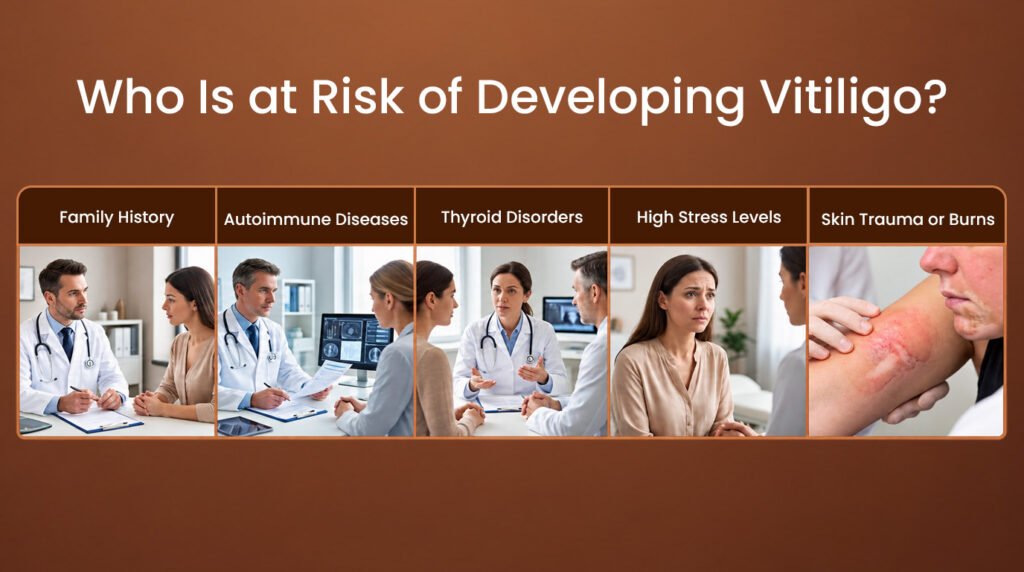
You may be at higher risk if you have:
- Family history of vitiligo
- Other autoimmune diseases
- Thyroid disorders
- High stress levels
- History of skin trauma or burns
However, vitiligo can affect anyone regardless of age or gender.
When Should You See a Doctor?
You should consult a dermatologist if you notice:
- White patches appearing on skin
- Rapid spreading of depigmented areas
- Premature whitening of hair
- No improvement in skin color over time
Early consultation improves treatment success significantly.
Conclusion
So, is vitiligo curable in India? The realistic answer is that while vitiligo may not always be completely curable, it is definitely manageable and treatable with advanced medical options available in India. Modern dermatology offers effective solutions that can restore pigmentation, control spread, and improve quality of life.
With early diagnosis, proper treatment, and consistent care, many patients achieve excellent cosmetic and functional results.
FAQs
Vitiligo does not have a guaranteed permanent cure yet. However, with modern treatments available in India, many patients achieve long-term repigmentation and control over the condition. In some stable cases, results can last for years if properly maintained.
Yes, vitiligo can spread over time if it is not treated or monitored. The speed of spreading varies from person to person depending on triggers like stress, immune response, or skin injury.
The best treatment depends on the stage and severity of the condition. Commonly used treatments in India include phototherapy (NBUVB), topical medications, laser therapy, and in stable cases, surgical options like skin grafting or melanocyte transplantation.
Yes, vitiligo can sometimes reappear after treatment, especially if the condition is active or if triggers are not controlled. Regular follow-up and maintenance therapy help reduce the risk of recurrence.
Vitiligo is not life-threatening or physically dangerous, but it can affect emotional well-being and confidence. With proper support and treatment, most people lead normal, healthy lives.
Vitiligo can start at any age, but it often appears before the age of 30. In many cases, early signs are seen during childhood or young adulthood.