

-
21 Sep 2026 BlogIs Vitiligo Curable in India? Everything You Need to Know
-
06 Mar 2025 UncategorizedUnderstanding the Causes of Acne and How to Treat It
-
06 Mar 2025 UncategorizedWhy Regular Skin Cancer Screenings Are Important
-
17 Oct 2026 BlogVitiligo vs Fungal Infection: How to Tell the Difference
-
10 Oct 2026 BlogCommon Myths About Vitiligo: Facts Every Patient Should Know
Quick Summary
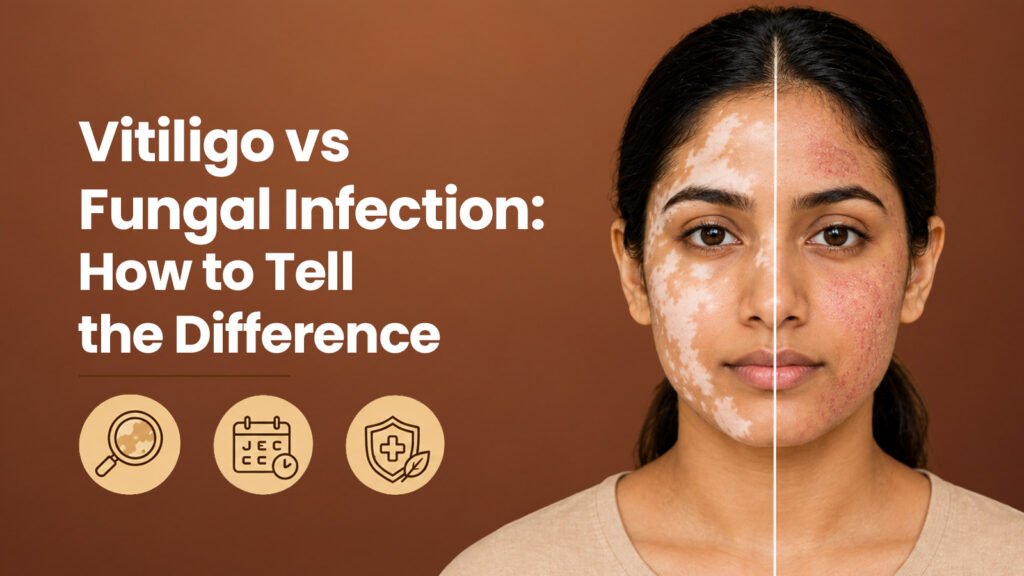
Discovering white patches on your skin can be concerning. Many people immediately wonder whether they have vitiligo or a fungal infection, as both conditions can cause changes in skin color. Although they may appear similar at first glance, they are entirely different in terms of causes, symptoms, treatment, and long-term management.
Understanding the difference between vitiligo and fungal infection is essential because the wrong treatment can delay recovery and worsen the condition. In this guide, we’ll explain how to identify each condition, their symptoms, diagnosis, and available treatment options.
What Is Vitiligo?
Vitiligo is a chronic autoimmune skin condition in which the body’s immune system mistakenly attacks melanocytes—the cells responsible for producing skin pigment (melanin). As a result, well-defined white patches develop on different parts of the body.
Vitiligo is not contagious, not caused by poor hygiene, and not a fungal infection. It can affect people of any age, skin tone, or gender.
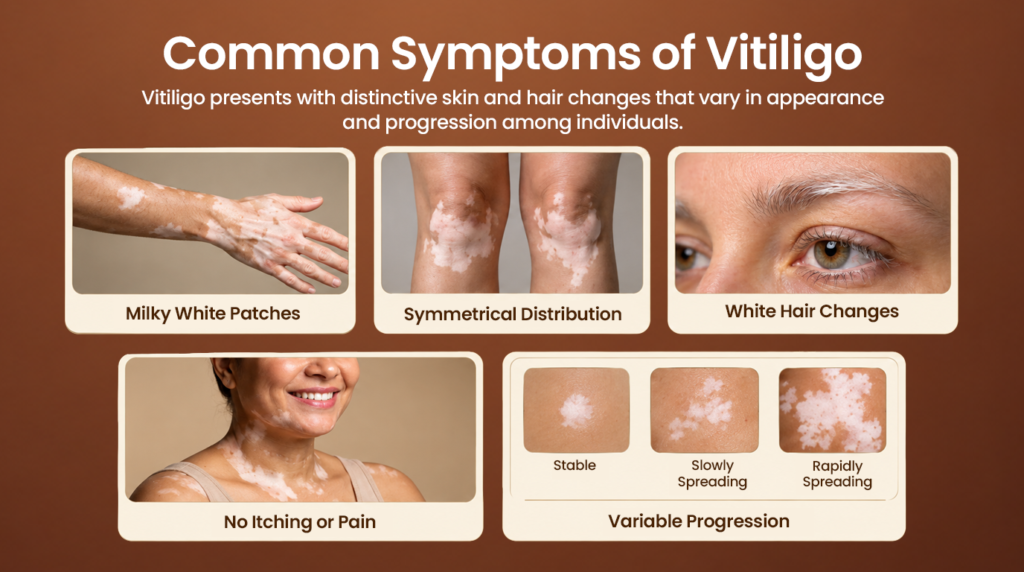
Common Symptoms of Vitiligo
- Milky-white patches with sharp, well-defined borders
- Symmetrical patches on both sides of the body
- White hair on the scalp, eyebrows, beard, or eyelashes
- No itching, pain, or scaling in most cases
- Slow or rapid progression depending on the individual
What Is a Fungal Infection?
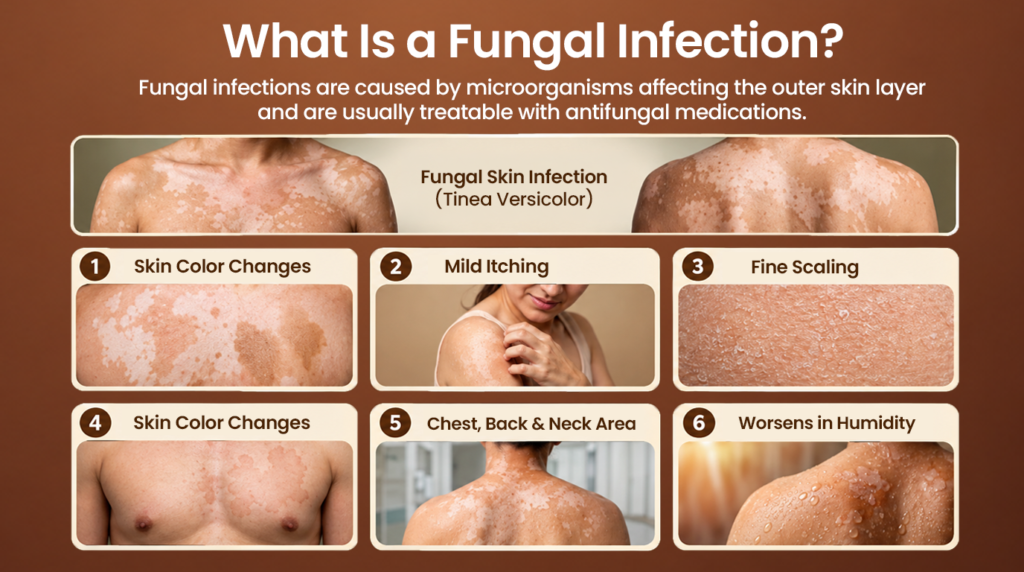
A fungal skin infection occurs when fungi grow on the outer layer of the skin. One common condition, tinea versicolor, often causes lighter or darker patches than the surrounding skin.
Unlike vitiligo, fungal infections are caused by microorganisms and are usually treatable with antifungal medications.
Common Symptoms of Fungal Infection
- White, pink, brown, or tan patches
- Mild itching, especially in warm weather
- Fine scaling or flaky skin
- Irregular patch borders
- Commonly affects the chest, back, neck, and shoulders
- May worsen in humid climates
Vitiligo vs Fungal Infection: Key Differences
Feature | Vitiligo | Fungal Infection |
Cause | Autoimmune condition | Fungal overgrowth |
Skin Color | Pure white patches | White, pink, brown, or tan patches |
Itching | Usually absent | Common |
Scaling | No | Often present |
Spread | Can gradually expand | May spread if untreated |
Contagious | No | Some fungal infections can spread through contact |
Treatment | Medical therapies, phototherapy | Antifungal creams or oral medication |
How to Identify Vitiligo?
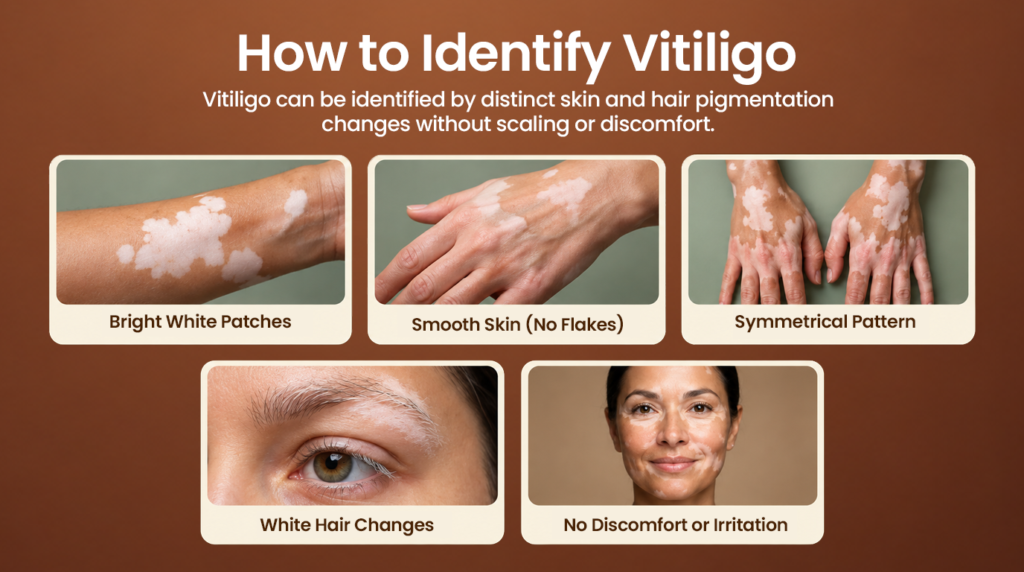
If you’re wondering how to identify vitiligo, look for these signs:
- Bright white patches with clear borders
- Smooth skin without flakes
- Symmetrical appearance
- White hair growing in affected areas
- No discomfort or irritation
However, self-diagnosis isn’t recommended. A dermatologist can confirm the condition through a clinical examination and, if necessary, a Wood’s lamp test or skin biopsy.
Can Fungal Infection Look Like Vitiligo?
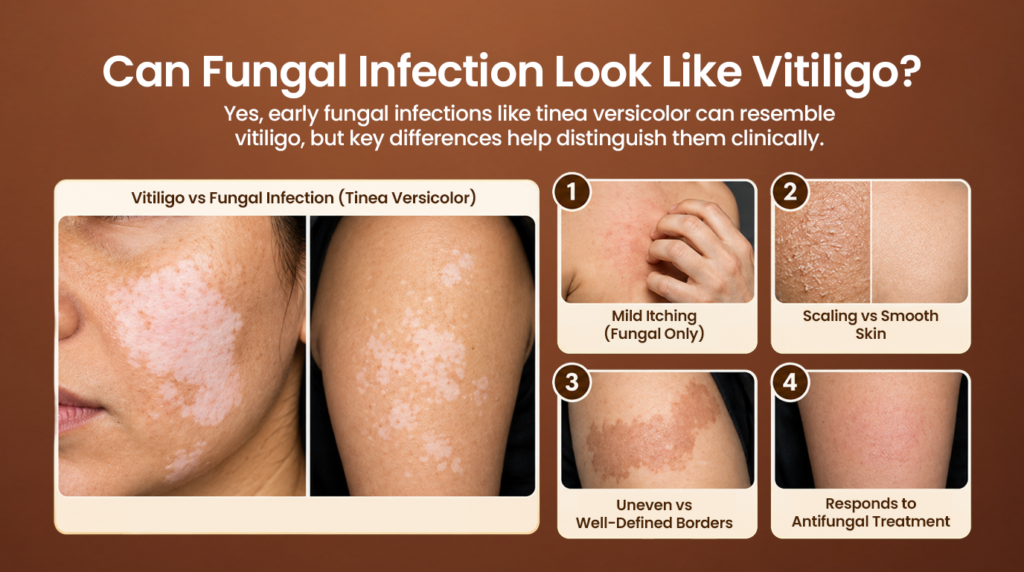
Yes. In the early stages, certain fungal infections—especially tinea versicolor—can resemble vitiligo because they cause lighter patches on the skin.
However, fungal infections usually have:
- Mild itching
- Fine scales
- Uneven pigmentation
- Response to antifungal treatment
Vitiligo patches remain smooth, bright white, and do not improve with antifungal creams.
White Patches on Skin: When Should You See a Doctor?
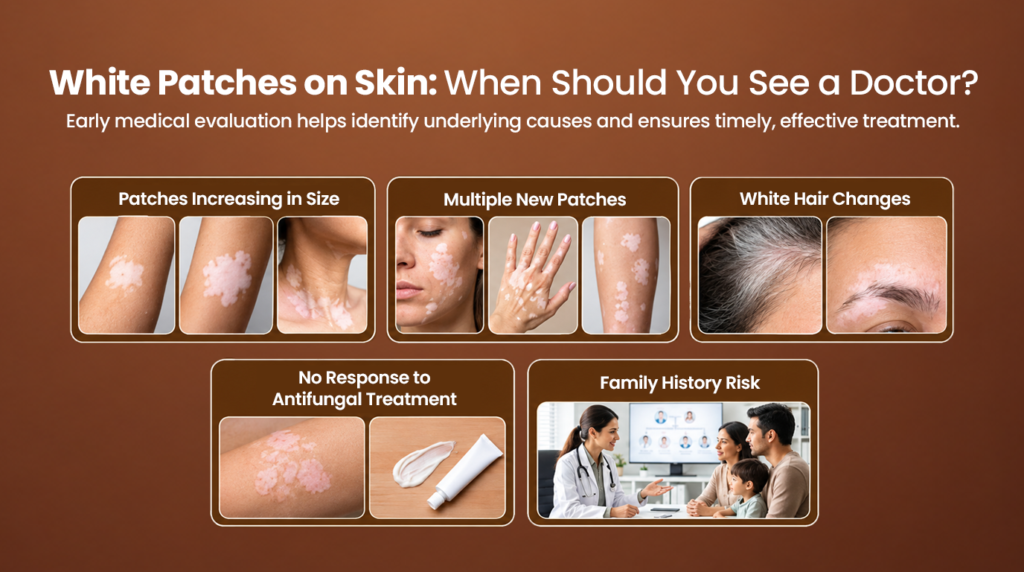
Consult a dermatologist if you notice:
- White patches increasing in size
- Multiple new patches appearing
- White hair developing in affected areas
- Persistent skin discoloration despite antifungal treatment
- A family history of autoimmune disorders or vitiligo
Early diagnosis helps determine whether the condition is vitiligo or another skin disorder and ensures the right treatment starts promptly.
Vitiligo Diagnosis
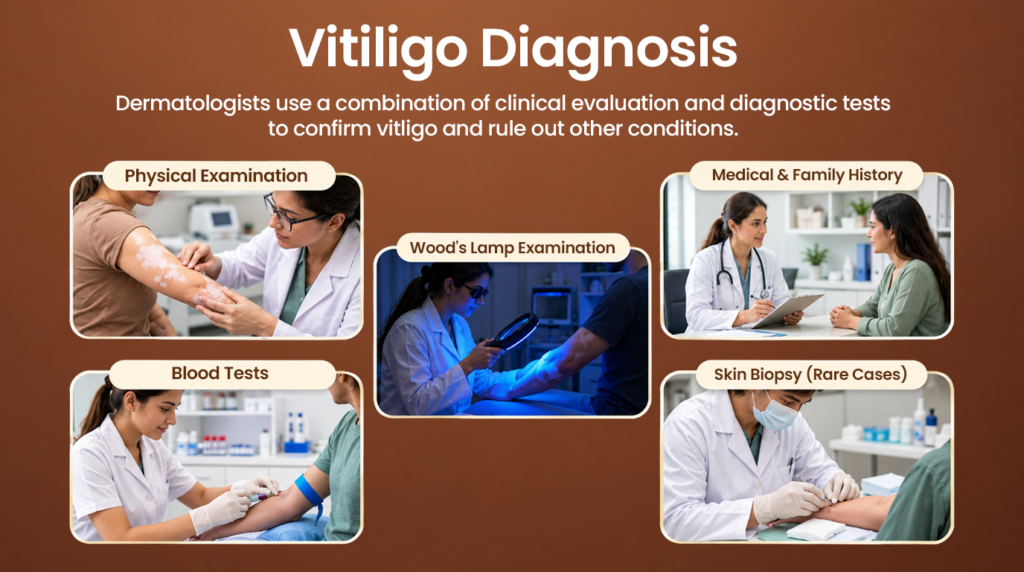
A dermatologist may use several methods to diagnose vitiligo:
- Physical examination
- Medical and family history
- Wood’s lamp examination
- Blood tests (to check for autoimmune conditions)
- Skin biopsy (rarely required)
Correct diagnosis prevents unnecessary use of antifungal medications when vitiligo is the actual cause.
White Skin Patches Treatment
Treatment depends on the underlying condition.
Vitiligo Treatment
- Topical corticosteroid creams
- Calcineurin inhibitors
- Narrowband UVB phototherapy
- Excimer laser therapy
- Surgical grafting (selected cases)
- Cosmetic camouflage for appearance
Fungal Infection Treatment
- Antifungal creams
- Medicated shampoos for affected areas
- Oral antifungal medicines for severe infections
- Good skin hygiene and moisture control
Never use steroid creams without medical advice, as they may worsen fungal infections.
Can Vitiligo Be Prevented?
Currently, there is no guaranteed way to prevent vitiligo because it is linked to autoimmune and genetic factors. However, protecting the skin from sunburn, managing stress, maintaining a healthy lifestyle, and seeking early medical care may help manage the condition and reduce complications.
Conclusion
Although vitiligo vs fungal infection is a common comparison, the two conditions are fundamentally different. Vitiligo is an autoimmune disorder that causes pigment loss, while fungal infections are caused by microorganisms and are generally treatable with antifungal medications.
If you notice unexplained white patches on the skin, avoid self-diagnosis. Visiting a qualified dermatologist is the safest way to receive an accurate diagnosis and the most effective treatment. Early medical intervention can improve outcomes and provide peace of mind.
Frequently Asked Questions
No. Vitiligo is an autoimmune condition that destroys pigment-producing cells. It is not caused by fungi and is not contagious.
Yes. Certain fungal infections, such as tinea versicolor, can cause lighter-colored patches that may resemble vitiligo.
Vitiligo usually causes smooth, bright white patches with well-defined borders and no itching or scaling. A dermatologist can confirm the diagnosis.
No. Antifungal creams are ineffective against vitiligo because the condition is not caused by fungi.
Most people with vitiligo do not experience itching. Mild itching may occur occasionally, but it is uncommon.
Some fungal skin infections can spread through direct skin contact or by sharing personal items, although conditions like tinea versicolor are generally not considered highly contagious.
Vitiligo progression varies from person to person. Some people develop only a few patches, while others may experience more widespread pigment loss over time.