


-
21 Sep 2026 BlogIs Vitiligo Curable in India? Everything You Need to Know
-
06 Mar 2025 UncategorizedUnderstanding the Causes of Acne and How to Treat It
-
06 Mar 2025 UncategorizedWhy Regular Skin Cancer Screenings Are Important
-
17 Oct 2026 BlogVitiligo vs Fungal Infection: How to Tell the Difference
-
10 Oct 2026 BlogCommon Myths About Vitiligo: Facts Every Patient Should Know
Quick Summary
Many people believe myths about vitiligo that can lead to fear, confusion, and stigma. The truth is that vitiligo is not contagious, is not caused by poor hygiene, and can affect people of any age or skin type. Understanding the facts about vitiligo helps patients seek the right treatment and live with greater confidence.
Common Myths About Vitiligo continue to create unnecessary anxiety for people living with this skin condition. Because vitiligo changes the skin’s appearance, many misconceptions have developed over the years. These myths often prevent individuals from seeking timely medical care and can negatively affect their emotional well-being.
This guide separates myths from facts, answers the most searched questions, and explains what medical experts know about vitiligo myths and facts, what causes vitiligo, and vitiligo treatment facts.
What Is Vitiligo?
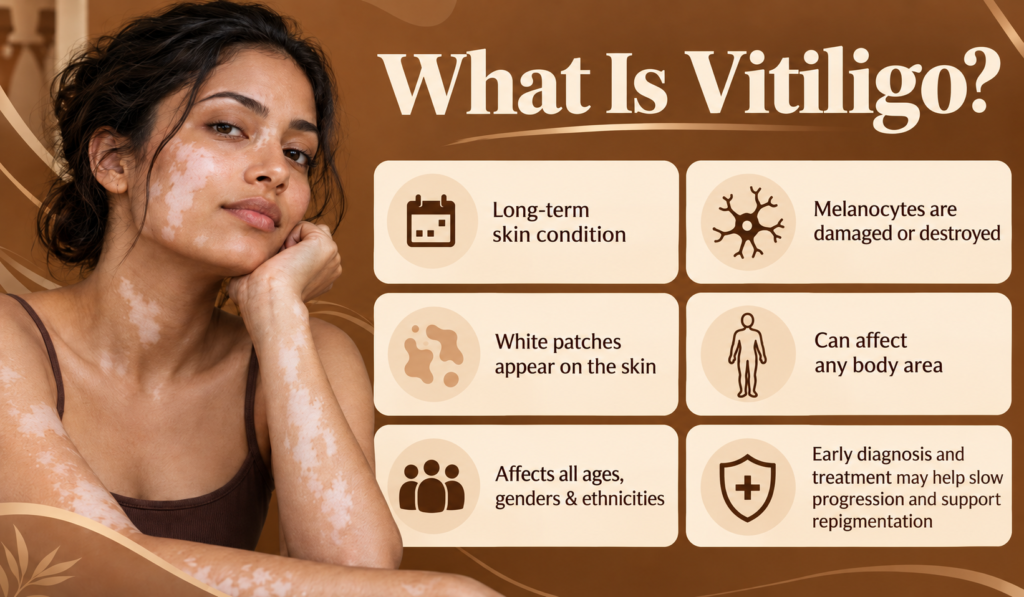
Vitiligo is a long-term skin condition in which the body’s pigment-producing cells (melanocytes) are damaged or destroyed, resulting in white patches on the skin. The condition can appear anywhere on the body and affects people of every age, gender, and ethnicity.
Although vitiligo is not life-threatening, early diagnosis and treatment may help slow its progression and improve repigmentation.
Why Are There So Many Myths About Vitiligo?
Many myths exist because people confuse vitiligo with infectious skin diseases or believe outdated information passed down through generations. Modern medical research has disproved many of these beliefs.
Learning the truth helps reduce social stigma and encourages people to seek professional care.

Myth 1: Is Vitiligo Contagious?
Fact: No, is vitiligo contagious? The answer is absolutely not.
Vitiligo cannot spread through:
- Touching someone
- Sharing food or utensils
- Hugging or shaking hands
- Swimming together
- Blood or saliva
It is an autoimmune condition, not an infection caused by bacteria or viruses.
Myth 2: Vitiligo Is Caused by Poor Hygiene
Fact: Poor hygiene does not cause vitiligo.
One of the biggest vitiligo misconceptions is that white patches develop because of poor cleanliness. In reality, personal hygiene has no connection with the development of vitiligo.
The condition is linked to:
- Autoimmune responses
- Genetic factors
- Family history
- Environmental triggers
- Physical or emotional stress
Myth 3: Can Vitiligo Be Cured Permanently?
Fact: There is currently no guaranteed permanent cure, but effective treatments are available.
Many people search can vitiligo be cured, hoping for a permanent solution. While there is no universal cure, several treatments can successfully restore pigment and help manage the condition.
Common treatment options include:
- Topical medications
- Phototherapy (light therapy)
- Oral medications in selected cases
- Surgical procedures for stable vitiligo
- Cosmetic camouflage
Early treatment often provides better results.
Myth 4: Vitiligo Only Affects the Skin
Fact: Vitiligo can also affect emotional health.
Although vitiligo usually does not cause pain or physical illness, it can significantly affect confidence, self-esteem, and mental well-being.
Support from family, counseling, and patient education can make a positive difference.
Myth 5: What Causes Vitiligo?
Fact: The exact cause is still being studied, but experts believe several factors contribute.
Possible causes include:
- Autoimmune disorders
- Genetic predisposition
- Family history
- Oxidative stress
- Skin injury
- Severe sunburn
- Emotional stress as a trigger in some individuals
Understanding what causes vitiligo helps doctors recommend the most suitable treatment plan.
Myth 6: Vitiligo Always Spreads Rapidly
Fact: Every case is different.
Some people notice only a few small white patches throughout their lives, while others may experience gradual or faster progression.
The course of vitiligo depends on:
- Type of vitiligo
- Individual immune response
- Age
- Early treatment
- Overall health
Regular follow-ups with a dermatologist help monitor changes.
Myth 7: There Are No Effective Treatments
Fact: Modern medicine offers several evidence-based therapies.
Recent advances have greatly improved vitiligo treatment facts. Depending on the severity and type of vitiligo, treatment may include:
- Corticosteroid creams
- Calcineurin inhibitors
- Narrowband UVB phototherapy
- Excimer laser therapy
- Skin grafting for stable cases
- Depigmentation therapy in selected patients
A dermatologist can recommend the best treatment based on your condition.

How Can You Manage Vitiligo Successfully?
Living with vitiligo involves more than medical treatment. Daily care can improve skin health and confidence.
Helpful tips include:
- Apply sunscreen every day.
- Protect skin from injuries and sunburn.
- Follow your dermatologist’s treatment plan.
- Eat a balanced diet and maintain a healthy lifestyle.
- Join support groups to improve emotional well-being.
Building vitiligo awareness helps reduce stigma and encourages early medical consultation.
Conclusion
Understanding the truth behind Common Myths About Vitiligo empowers patients and families to make informed decisions. Vitiligo is not contagious, is not caused by poor hygiene, and should never be a reason for discrimination. With proper diagnosis, modern treatments, and ongoing medical support, many people successfully manage the condition and lead healthy, confident lives.
Frequently Asked Questions
No. Vitiligo cannot spread through physical contact, sharing food, or close interaction.
There is no permanent cure yet, but several treatments can help restore skin pigment and control progression.
Vitiligo is believed to result from autoimmune, genetic, and environmental factors rather than infection or poor hygiene.
Stress is not the direct cause but may act as a trigger or worsen the condition in some individuals.
A family history may increase the risk, but not everyone with affected relatives develops vitiligo.
Yes. Vitiligo can occur at any age, including during childhood.
Consult a dermatologist if you notice new white patches, rapidly spreading depigmentation, whitening of hair in affected areas, or if the condition is affecting your confidence or daily life.