


-
21 Sep 2026 BlogIs Vitiligo Curable in India? Everything You Need to Know
-
06 Mar 2025 UncategorizedUnderstanding the Causes of Acne and How to Treat It
-
06 Mar 2025 UncategorizedWhy Regular Skin Cancer Screenings Are Important
-
17 Oct 2026 BlogVitiligo vs Fungal Infection: How to Tell the Difference
-
10 Oct 2026 BlogCommon Myths About Vitiligo: Facts Every Patient Should Know
Quick Summary
Wondering how vitiligo progresses over time? Vitiligo usually starts as a small white patch and may spread gradually or rapidly depending on the individual. While some people experience stable vitiligo for years, others notice new patches developing over time. Early diagnosis, proper treatment, and regular follow-ups with a dermatologist can help slow vitiligo progression and improve repigmentation outcomes.
If you’ve recently noticed white patches on your skin, you’re probably wondering how vitiligo progresses over time and whether it will continue to spread. The progression of vitiligo is different for every person. Some experience only a few patches throughout their lives, while others develop larger areas of depigmentation over months or years.
Understanding the stages of vitiligo, recognizing the warning signs, and seeking treatment early can help manage the condition more effectively. In this guide, we’ll answer the most common questions about vitiligo progression and explain what you can expect at each stage.
What Is Vitiligo Progression?
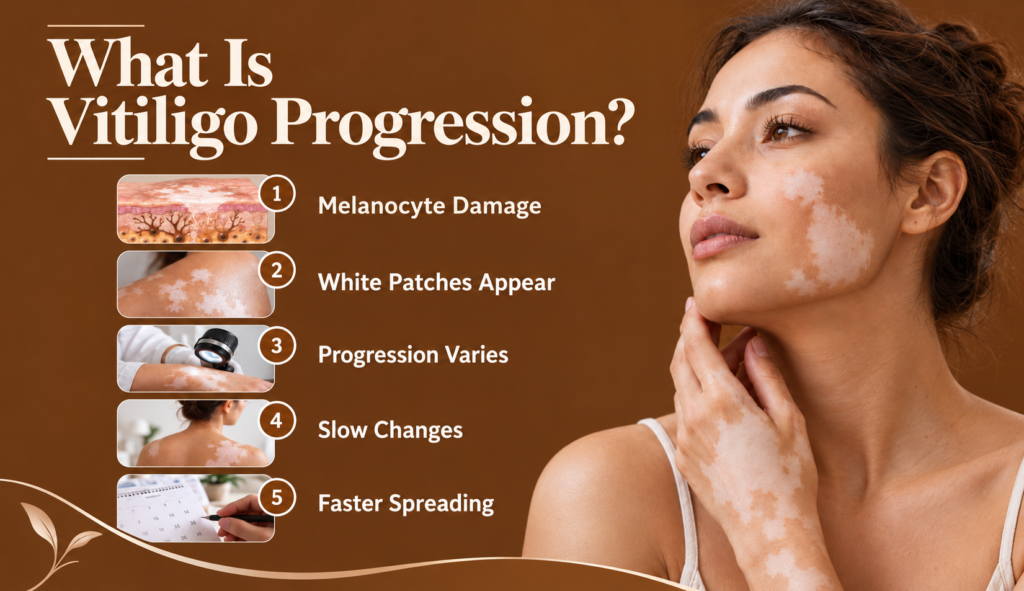
Vitiligo progression refers to the gradual loss of skin pigment caused by the destruction of melanocytes—the cells responsible for producing melanin. As these cells become damaged, white patches begin to appear and may spread to different parts of the body.
The speed of progression varies from person to person. Some individuals experience slow changes over several years, while others notice rapid spreading within a few months.
How Vitiligo Progresses Over Time?
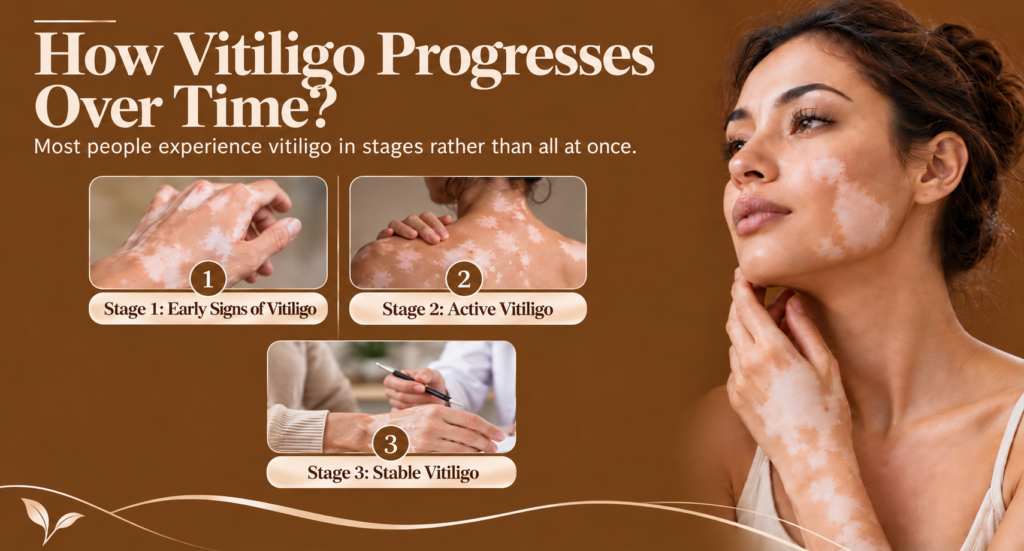
Most people experience vitiligo in stages rather than all at once.
Stage 1: Early Signs of Vitiligo
The condition often begins with:
- Small white patches on the skin
- Loss of skin color around the fingers, lips, eyes, or feet
- Premature whitening of hair
- Mild itching before new patches appear (in some cases)
At this stage, early diagnosis offers the best opportunity to slow disease progression.
Stage 2: Active Vitiligo
During the active phase:
- Existing patches become larger.
- New white patches appear.
- Both sides of the body may be affected.
- Pigment loss becomes more noticeable.
This is when treatment is most important to reduce further pigment loss.
Stage 3: Stable Vitiligo
In stable vitiligo:
- No new patches develop.
- Existing patches remain unchanged.
- The condition may stay stable for months or even years.
Patients with stable vitiligo are often better candidates for surgical treatments if required.
How Fast Does Vitiligo Spread?
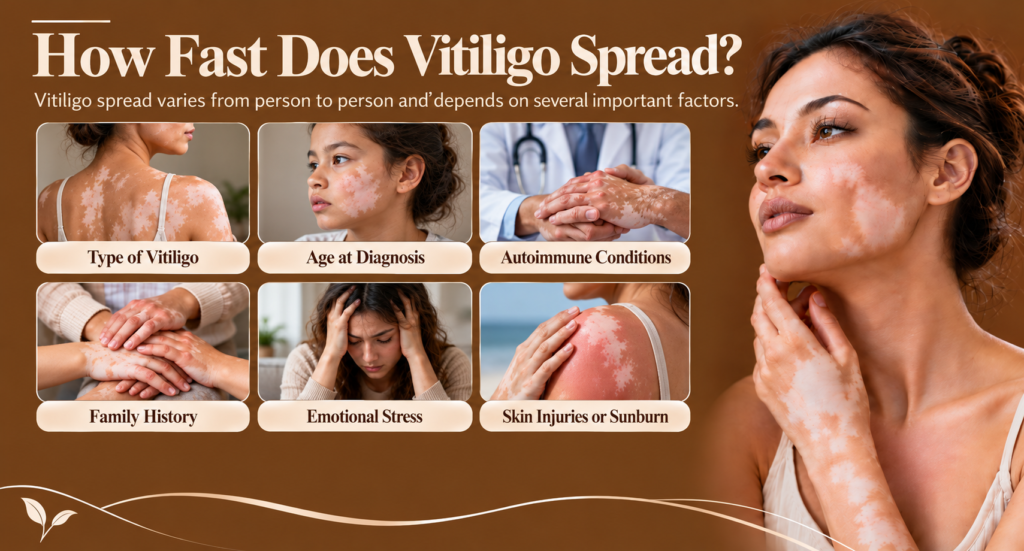
One of the most common concerns is how fast does vitiligo spread.
The answer depends on several factors, including:
- Type of vitiligo
- Age at diagnosis
- Autoimmune conditions
- Family history
- Emotional stress
- Skin injuries or sunburn
Some people develop only one or two patches throughout life, while others experience widespread depigmentation within a short period.
Does Vitiligo Spread to the Whole Body?
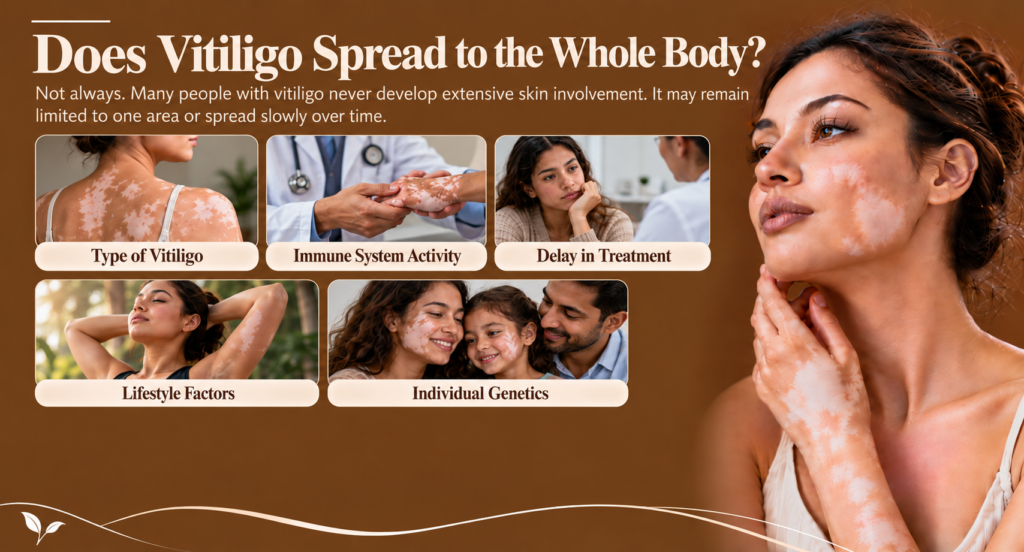
Not always.
Many people with vitiligo never develop extensive skin involvement. The disease may remain limited to one area or spread slowly over time.
Factors influencing spread include:
- Type of vitiligo
- Immune system activity
- Delay in treatment
- Lifestyle factors
- Individual genetics
Early intervention significantly improves the chances of slowing progression.
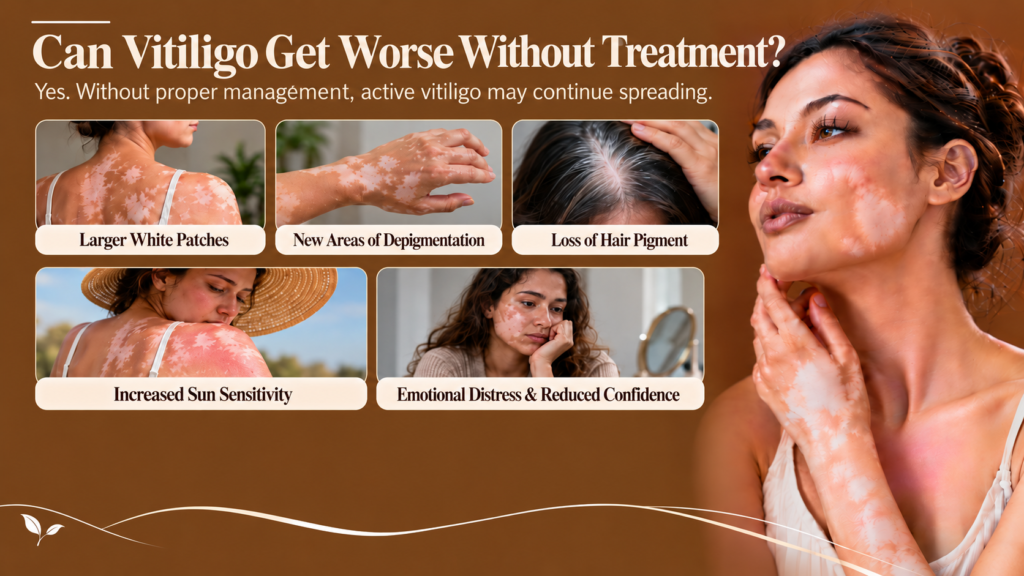
Can Vitiligo Get Worse Without Treatment?
Yes.
Without proper management, active vitiligo may continue spreading.
Possible complications include:
- Larger white patches
- New areas of depigmentation
- Loss of hair pigment
- Increased sun sensitivity
- Emotional distress and reduced confidence
Although vitiligo is not life-threatening, treating it early helps preserve healthy skin pigmentation.
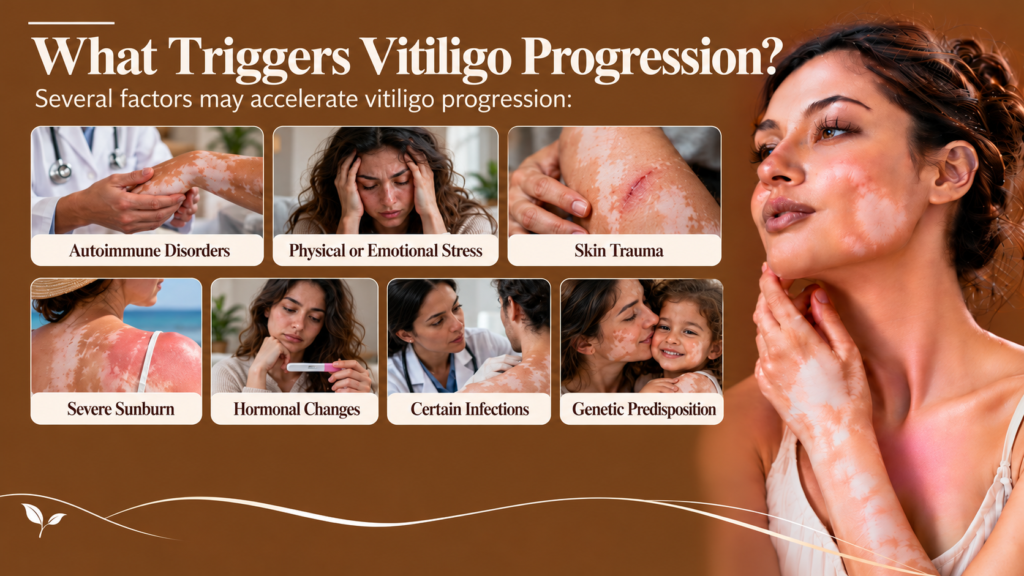
What Triggers Vitiligo Progression?
Several factors may accelerate vitiligo progression:
- Autoimmune disorders
- Physical or emotional stress
- Skin trauma
- Severe sunburn
- Hormonal changes
- Certain infections
- Genetic predisposition
While these triggers do not affect everyone, minimizing them may help reduce flare-ups.
Can Vitiligo Stop Progressing?
Yes.
In many individuals, vitiligo eventually becomes stable after treatment or naturally over time.
Your dermatologist may recommend:
- Topical medications
- Phototherapy (NB-UVB)
- Excimer laser therapy
- Oral medications for active cases
- Lifestyle modifications
- Regular skin monitoring
Starting treatment early often leads to better disease control and improved repigmentation.
How Is Vitiligo Progression Diagnosed?
Dermatologists evaluate progression using:
- Physical skin examination
- Medical history
- Wood’s lamp examination
- Digital photography
- Blood tests for autoimmune disorders when needed
These assessments help determine whether the disease is active or stable.
What Is the Best Treatment to Stop Vitiligo Progression?
Treatment depends on the severity and extent of the condition.
Common options include:
- Corticosteroid creams
- Calcineurin inhibitors
- Narrowband UVB phototherapy
- Excimer laser treatment
- Oral immunomodulatory medicines (selected cases)
- Surgical procedures for stable vitiligo
Your dermatologist will create a personalized treatment plan based on your condition.
How Can You Slow Vitiligo Progression Naturally?
While natural methods cannot cure vitiligo, they can support medical treatment.
Helpful habits include:
- Protect skin from sunburn with sunscreen.
- Reduce emotional stress.
- Eat a balanced diet rich in antioxidants.
- Avoid skin injuries whenever possible.
- Follow your prescribed treatment consistently.
- Schedule regular dermatologist visits.
Conclusion
Understanding how vitiligo progresses over time allows patients to recognize early symptoms and seek treatment before extensive pigment loss occurs. While the condition progresses differently in every individual, early diagnosis, medical treatment, and healthy lifestyle habits can significantly improve long-term outcomes. If you notice new white patches or changes in existing ones, consult a dermatologist promptly to receive the most effective care.
Frequently Asked Questions
Vitiligo may spread over weeks, months, or years. The progression rate varies depending on the type of vitiligo, immune activity, and individual factors.
Yes. Some people experience stable vitiligo where no new patches appear for long periods. However, medical evaluation is still recommended.
Emotional and physical stress may trigger or worsen vitiligo in some individuals, although it is not the sole cause.
In some children, vitiligo may spread gradually, while in others it may remain stable for years. Regular monitoring helps guide treatment.
Early treatment with medications or phototherapy can help slow progression, stabilize the disease, and encourage repigmentation.
No. Vitiligo is not contagious or life-threatening, but it can affect appearance, emotional well-being, and confidence.
Non-segmental vitiligo generally has a higher likelihood of spreading compared with segmental vitiligo, although progression varies among individuals.